
7 Best Supplements for Brain Fog After 40

If you’re looking for supplements for brain fog after 40, chances are you’ve noticed some changes. Maybe you forget why you walked into a room, struggle to find the right words, or have trouble concentrating on work that used to feel easy.
Brain fog can become more noticeable as you get older, but there are several possible reasons for it, including poor sleep, stress, hormonal changes, and nutritional deficiencies.
Certain supplements can support memory, focus, and mental performance through different pathways. Understanding how they work can help you choose ingredients that make sense for your needs.
Here are 7 worth knowing about.
What Causes Brain Fog After 40?
Brain fog describes difficulty concentrating, forgetfulness, slower thinking, and mental fatigue. It’s not a medical diagnosis, and it can happen at any age.
Poor sleep and chronic stress are common contributors. Hormonal changes during perimenopause and menopause can also affect memory and concentration. Other possible causes include low vitamin B12 or iron, blood sugar problems, medication side effects, and thyroid disorders.
Your brain also needs a tremendous amount of energy. Although it makes up roughly 2% of your body weight, it uses about 20% of your resting energy expenditure.
Your mitochondria help produce the ATP needed for brain cells to communicate and function. This is one reason researchers are studying ingredients that support cellular energy metabolism alongside nutrients involved in neurotransmitter production.
1. Vitamin B12
Vitamin B12 is essential for healthy nerves, red blood cell production, and normal brain function. When levels get too low, you may experience fatigue, forgetfulness, and difficulty concentrating.
B12 deficiency becomes more common with age as absorption can decline. People taking metformin or long-term acid-reducing medications, as well as those following vegan diets, may also be at higher risk.
Correcting a B12 deficiency can help address related cognitive symptoms and fatigue. If you’re experiencing persistent brain fog, checking your B12 levels is a good starting point, especially if you have risk factors for deficiency.
Both methylcobalamin and cyanocobalamin are effective forms of B12. The appropriate dose depends on your levels and how well your body absorbs it.
2. Creatine Monohydrate
Creatine is well known for supporting muscle strength, but it also plays an important role in brain energy metabolism. It helps regenerate ATP, the energy your brain cells need for memory, concentration, and other cognitive tasks.
A 2024 review of 16 clinical trials found that creatine supplementation improved certain measures of memory, attention, and processing speed. This makes creatine a practical supplement to consider for supporting both brain function and muscle health as you age.
A daily dose of 3-5 grams of creatine monohydrate is a well-established approach for muscle support. Creatine is typically taken consistently, with cognitive research also examining its effects across different dosing protocols.
When choosing a supplement, look for a high-quality creatine monohydrate with independent purity testing. Pürest Creatine™ is one example, offering a high-purity ingredient with third-party testing and batch-level quality documentation.
For more on the research and practical use, see my guide to creatine for brain fog.
3. Paraxanthine
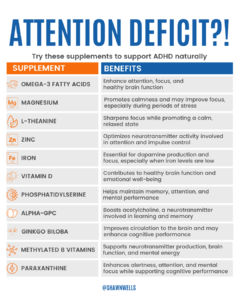
Paraxanthine is the primary metabolite of caffeine, meaning it’s the main compound your body produces when breaking down caffeine. It supports alertness and focus, making it particularly useful during long workdays or mentally demanding tasks.
A human clinical trial found that enfinity® paraxanthine improved several measures of cognitive performance, including attention, reasoning, and reaction time. The most consistent benefits were seen at 100-200 mg, with effects measured within hours of supplementation.
Paraxanthine is a practical option for supporting mental clarity and sustained attention when you need to stay sharp. As with other compounds that promote alertness, timing matters. Taking it earlier in the day can help avoid interfering with sleep.
4. Alpha-GPC
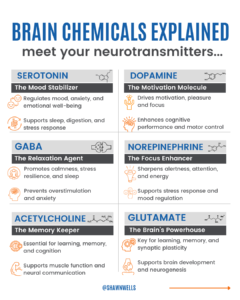
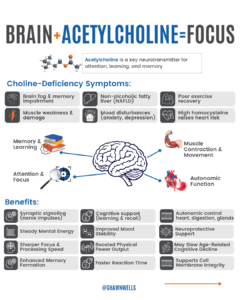
Alpha-GPC provides choline, which your brain uses to produce acetylcholine, a neurotransmitter involved in attention, learning, and memory.
When you’re doing something that requires concentration, such as following a complicated conversation or working through a difficult problem, acetylcholine is one of the chemical messengers involved.
A 2024 human clinical trial found that 315-630 mg of GeniusPure® Alpha-GPC improved performance on a test measuring attention and cognitive control. The higher dose also improved how quickly participants completed the test.
Alpha-GPC is worth considering for attention and cognitive control, particularly during tasks that require focused thinking and processing information. The clinical trial demonstrated measurable benefits approximately one hour after supplementation, making it particularly relevant for mentally demanding activities.
5. Salidroside
Salidroside is one of the main active compounds in Rhodiola rosea, a plant known for supporting the body’s response to stress and fatigue.
It’s particularly useful to consider when you feel mentally drained during demanding periods, making it harder to stay focused and productive throughout the day.
Human research on rhodiola extracts has shown improvements in stress-related fatigue and certain measures of attention. A separate clinical trial of pure salidroside found that it helped participants maintain physical performance and resist fatigue during demanding exercise.
Salidroside is a promising option for fatigue resistance and stress resilience, especially when you’re dealing with sustained physical or mental demands.
SalidroPure® provides a concentrated, purified form of salidroside, allowing for precise and consistent dosing without relying on the varying amounts found in whole rhodiola extracts.
6. L-Ergothioneine
L-Ergothioneine is a naturally occurring antioxidant found in mushrooms and certain other foods. Your body has a specialized transport system that delivers it into tissues, where it helps protect cells from oxidative stress.
This is especially relevant to brain health as you age. Oxidative stress can affect mitochondria and nerve cells, which depend on a steady supply of energy to function properly.
A 2024 human clinical study found improvements in learning performance among older adults taking ergothioneine. Researchers also observed favorable changes in a biomarker associated with nerve-cell damage.
L-Ergothioneine is a promising ingredient for supporting cellular health and healthy brain aging. MitoPrime® provides a high-purity form of L-ergothioneine, with human research on ergothioneine examining doses including 10-25 mg daily.
7. Magnesium
Magnesium supports nerve signaling, energy production, and normal brain function. Since many Americans don’t get enough through food, maintaining adequate magnesium intake is an important part of supporting cognitive health.
Certain forms have also been studied for memory and mental performance. A 2026 human clinical trial found that magnesium L-threonate improved working memory, reaction time, and overall cognitive performance after 6 weeks.
Magnesium L-threonate is particularly interesting for cognitive support, while magnesium glycinate and citrate are practical options for maintaining healthy magnesium levels.
The study used 2 grams of magnesium L-threonate daily, providing approximately 145 mg of elemental magnesium. Check the elemental magnesium amount on supplement labels, since it differs from the total weight of the compound.
For adults, the upper limit for magnesium from supplements and medications is 350 mg daily unless a healthcare professional recommends otherwise. People with kidney disease or relevant medication interactions should seek medical guidance.
How to Choose a Supplement for Brain Fog
The right supplement depends on what you’re trying to improve.
For focus and attention, paraxanthine and Alpha-GPC have human research supporting specific measures of cognitive performance. Creatine is a good option for daily brain energy support, while salidroside is particularly relevant for fatigue resistance during stressful periods.
For long-term cognitive health, L-ergothioneine is worth considering for its role in cellular protection and healthy aging. Vitamin B12 and magnesium are especially important when your intake or nutrient levels are inadequate.
Once you’ve chosen an ingredient, check the form and clinically studied dose. Start with one supplement at a time and track something specific, such as how often you lose concentration, how mentally tired you feel in the afternoon, or how easily you complete demanding tasks.
For more guidance, read my article on how to know if a supplement is working.
If brain fog persists, worsens, or interferes with daily activities, seek medical evaluation to identify possible underlying causes.
Share

Who is Shawn Wells?
Although I’ve suffered from countless issues, including chronic pain, auto-immunity, and depression, those are the very struggles that have led me to becoming a biochemist, formulation scientist, dietitian, and sports nutritionist who is now thriving. My personal experiences, experiments, and trials also have a much deeper purpose: To serve you, educate you, and ultimately help you optimize your health and longevity, reduce pain, and live your best life.



ORDER THE ENERGY FORMULA
Discover the 6 foundational pillars to cultivate a more caring, compassionate, connected, unified and purpose-filled life.
Hardcover, Audible & EBook Available!
UNLEASH YOUR UNLIMITED POTENTIAL
