
7 Ways to Improve Body Composition After 40

If you want to improve body composition after 40, start with how you train, eat, and recover. Cutting more food can backfire if you are already struggling to maintain strength and energy.
Your weight may be similar to what it was a few years ago, while your waist, clothing fit, or strength has changed.
Body composition describes how much of your body is fat and fat-free tissue, including muscle, bone, organs, and water. For most people pursuing body recomposition, the goal is to reduce excess fat while maintaining or building muscle.
Does Your Metabolism Slow Down After 40?
A large study of daily energy use across the lifespan found that energy expenditure stayed relatively stable from about 20 to 60 after accounting for body size and composition.
Your own calorie needs can still change. A desk job, less walking, and fewer workouts can reduce how much energy you use. Changes in muscle mass, sleep, and hormones also deserve attention when your body starts responding differently.
Review an ordinary week before changing your diet. How often do you lift? Are you eating enough protein? How much time do you spend sitting?
How to Improve Body Composition After 40
Build your plan around strength training, adequate protein, a suitable calorie intake, daily movement, and sleep. Use supplements to address specific goals within that routine.
1. Follow a Strength Program You Can Progress
Repeating the same workout with the same weights can eventually limit progress.
Track your exercises, weights, and repetitions. As you get stronger, gradually increase the challenge through more repetitions, a little more weight, or better control.
Research on resistance training and body composition supports its role in building lean mass and reducing body fat. It also helps preserve muscle during calorie restriction.
2-3 full-body sessions per week can be a manageable starting point. Include:
- A squat or sit-to-stand
- A hip hinge, such as a deadlift variation
- A row or pulldown
- A push-up or press
- A carry or exercise that challenges your trunk
Choose versions you can perform comfortably. A qualified trainer can help with technique and appropriate resistance.
Once you can complete your planned repetitions with good form and the sets feel easier, consider a small increase.
2. Check Your Protein Intake at Each Meal
Breakfast and lunch are worth checking if most of your protein comes at dinner.
Sports nutrition guidance on protein suggests about 1.4-2.0 grams per kilogram of body weight daily for most exercising adults. That is roughly 0.6-0.9 grams per pound.
For a 160-pound adult, that works out to about 100-145 grams per day. Your needs depend on training, calorie intake, and health.
Try including 25-40 grams at each main meal, with another protein source if needed to reach your daily total.
Greek yogurt, fish, poultry, lean meat, tofu, and protein shakes can help. If eggs are your only protein at breakfast, check whether your usual serving meets your meal target.
Check labels and usual portions before assuming you are getting enough. My guide to protein per meal for muscle gain includes more detail on planning those meals.
Dileucine and Muscle Support
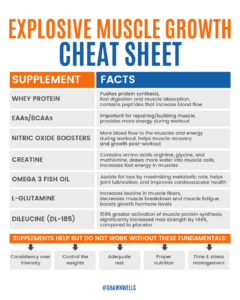
Dileucine, available as DL185®, consists of 2 linked leucine molecules. It supports muscle-building processes and has been studied for muscle protein synthesis and strength-training adaptations.
In a 10-week randomized trial, 34 resistance-trained men followed a lifting program while taking dileucine, leucine, or a placebo. Those taking 2 grams of dileucine daily gained more leg-press strength than the placebo group and improved leg-press endurance more than the leucine group.
For adults focused on maintaining strength as they age, dileucine offers a targeted way to support training. The published trial involved younger men, with benefits in specific strength and endurance measures.
Use it alongside adequate complete protein and progressive resistance training. Protein supplies the full range of essential amino acids your muscles need, while dileucine provides additional support for the muscle-building response.
3. Keep Calorie Cuts Manageable
Fat loss requires an average calorie intake below what you use over time. Cutting too much can leave you hungry, less active, and unable to train well.
Research on diet and body composition emphasizes calorie intake, adequate protein, and the rate of weight loss.
Review portions, snacks, alcohol, and drinks first. A daily habit you barely notice may be easier to adjust than making every meal smaller.
Keep meals built around protein and produce, with enough carbohydrate and fat to support your routine. Bread, rice, potatoes, and fruit can all fit.
Watch your response over several weeks. Falling strength, persistent hunger, and low energy are reasons to reassess the size of your deficit.
If you are returning to strength training after time away, eating near maintenance while rebuilding a consistent routine may be a useful first step.
4. Add Movement Between Workouts
A few gym sessions can coexist with long stretches of sitting.
Take a short walk after lunch, get up between meetings, or walk during a phone call. In a controlled trial, brief walking breaks during prolonged sitting improved post-meal glucose handling in inactive middle-aged men.
The study measured short-term responses. It did not establish long-term fat loss.
Check your usual step count for a week, then add a manageable amount, such as another 1,000 steps a day. Choose a time you can repeat.
As daylight gets shorter, an indoor walking route or treadmill can help you keep that appointment.
5. Consider Creatine Alongside Strength Training
Creatine is one of the first supplements I consider for someone who lifts consistently. It helps muscles regenerate ATP, which supplies energy for short, demanding efforts.
Human trials summarized in a meta-analysis of creatine and resistance training suggest added benefits for lean tissue mass and strength in older adults.
For many healthy adults, 3-5 grams of creatine monohydrate daily is a practical approach. Choose a time you will remember.
Pürest Creatine™ is a branded creatine monohydrate option. Check the finished product for a clearly stated dose and quality testing.
Creatine can increase muscle water and scale weight early on. Keep that in mind when comparing weigh-ins after starting it.
Ask your healthcare professional before using creatine if you have kidney concerns or other relevant medical conditions.
6. Allow Enough Time for Sleep and Recovery
Adding workouts while sleeping 5-6 hours can make recovery harder.
In a small, short-term trial, restricted sleep during a calorie-controlled diet led to less fat loss and more fat-free tissue loss than a longer sleep opportunity.
Aim for a schedule that allows roughly 7-9 hours of sleep. Keep your wake time reasonably consistent and allow time to wind down.
Space demanding workouts so you have time to recover. If soreness lingers and performance keeps declining, reduce training volume temporarily and review your sleep and food intake.
For women, perimenopause can bring sleep disruption and changes in body-fat distribution. Addressing those symptoms may make your routine easier to sustain. My guide to perimenopause and menopause supplements discusses support for different needs during that transition.
7. Address What Makes Workouts Hard to Complete
Low workout energy can come from too little food, dehydration, poor sleep, or a session that exceeds your current fitness.
If several hours have passed since lunch, try a snack before training. If you keep skipping an hour-long session, plan a shorter one you can finish consistently.
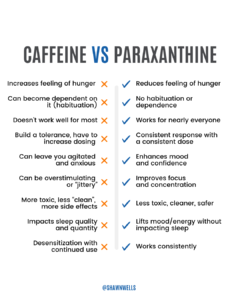
For workout focus, paraxanthine supports attention and reaction time. It is the main active metabolite your body produces when it breaks down caffeine.
In a randomized crossover trial involving 12 trained runners, 200 milligrams of paraxanthine improved specific measures of attention and reaction time after exercise. Participants took it 60 minutes before running.
Look for enfinity® on the label, the branded paraxanthine used in that research. Check the dose and whether the formula also contains caffeine before combining it with other products.
Keep it early enough that it does not interfere with sleep, and adjust based on your response.
Which Paraxanthine Product Fits Your Routine?
Choose a format you will find convenient, and check how its ingredients overlap with supplements you already take.
- Life Cider X (Use SHAWNWELLS for 15% off)
A ready-to-drink option if you prefer a flavored drink before training without mixing a powder. It combines paraxanthine with apple cider vinegar. - Unmatched Paraxanthine (Use SHAWN10 for 10% off)
A targeted enfinity® paraxanthine option if you want to add workout focus support to your existing routine without choosing a broader daily wellness blend. - MTE Daily Energy & Wellness (Use SWELLS for 15% off)
A powder you mix with water if you want a broader daily blend. It combines enfinity® paraxanthine with ingredients including L-theanine, saffron, and ashwagandha. Review the full formula if you already take adaptogens or other daily blends.
How to Track Body Recomposition After 40
To improve body composition after 40, follow several measures over time:
- Waist measurement: Measure in the same place under similar conditions every few weeks.
- Training performance: Record weights, repetitions, and how sessions feel.
- Weight trend: Compare averages across weeks.
- Clothing fit: Notice changes around your waist, hips, and shoulders.
Home body-fat scales give estimates that can shift with hydration. Use consistent conditions and avoid making changes based on a single reading.
A decreasing waist measurement with stable or improving strength can be useful progress even when weight changes slowly.
Can You Build Muscle and Lose Fat at the Same Time After 40?
Yes, especially when starting resistance training or returning after time away. Your training history, starting body composition, food intake, and recovery affect what is realistic.
Experienced lifters may find it more practical to focus on muscle gain or fat loss in separate phases.
How Long Does Body Recomposition Take?
Visible changes usually take months. Early weight changes can reflect water, stored carbohydrate, and food in your digestive tract.
Compare waist measurements, strength, and weight trends over several weeks. If nothing is changing despite a consistent routine, adjust one part of the plan so you can judge the effect.
Share

Who is Shawn Wells?
Although I’ve suffered from countless issues, including chronic pain, auto-immunity, and depression, those are the very struggles that have led me to becoming a biochemist, formulation scientist, dietitian, and sports nutritionist who is now thriving. My personal experiences, experiments, and trials also have a much deeper purpose: To serve you, educate you, and ultimately help you optimize your health and longevity, reduce pain, and live your best life.



ORDER THE ENERGY FORMULA
Discover the 6 foundational pillars to cultivate a more caring, compassionate, connected, unified and purpose-filled life.
Hardcover, Audible & EBook Available!
UNLEASH YOUR UNLIMITED POTENTIAL
