
Your Brain Loves the Gym: How Movement Builds Memory, Mood, and Mental Resilience

When most people think about exercise and brain health, they usually think of the obvious answer: exercise is good for the brain.
That is true, but it does not fully explain why movement can influence memory, mood, focus, energy, and long-term cognitive function.
Your brain is not separate from the rest of your body. It depends on blood flow, oxygen, glucose, ketones, amino acids, neurotransmitters, hormones, minerals, inflammatory balance, and mitochondrial energy. When you exercise, you are not only training your muscles. You are training the systems your brain relies on every day.
For years, exercise has been framed mostly around weight loss, aesthetics, or athletic performance. Those goals can be valid, but they are only part of the picture. If you care about mental clarity, emotional resilience, sharper memory, and staying capable as you age, movement may be one of the most powerful tools you have.
The key is using exercise as a signal, not punishment. The right dose of movement tells your body and brain to build capacity, improve efficiency, recover better, and become more resilient.
Exercise and Brain Health: The Quick Answer
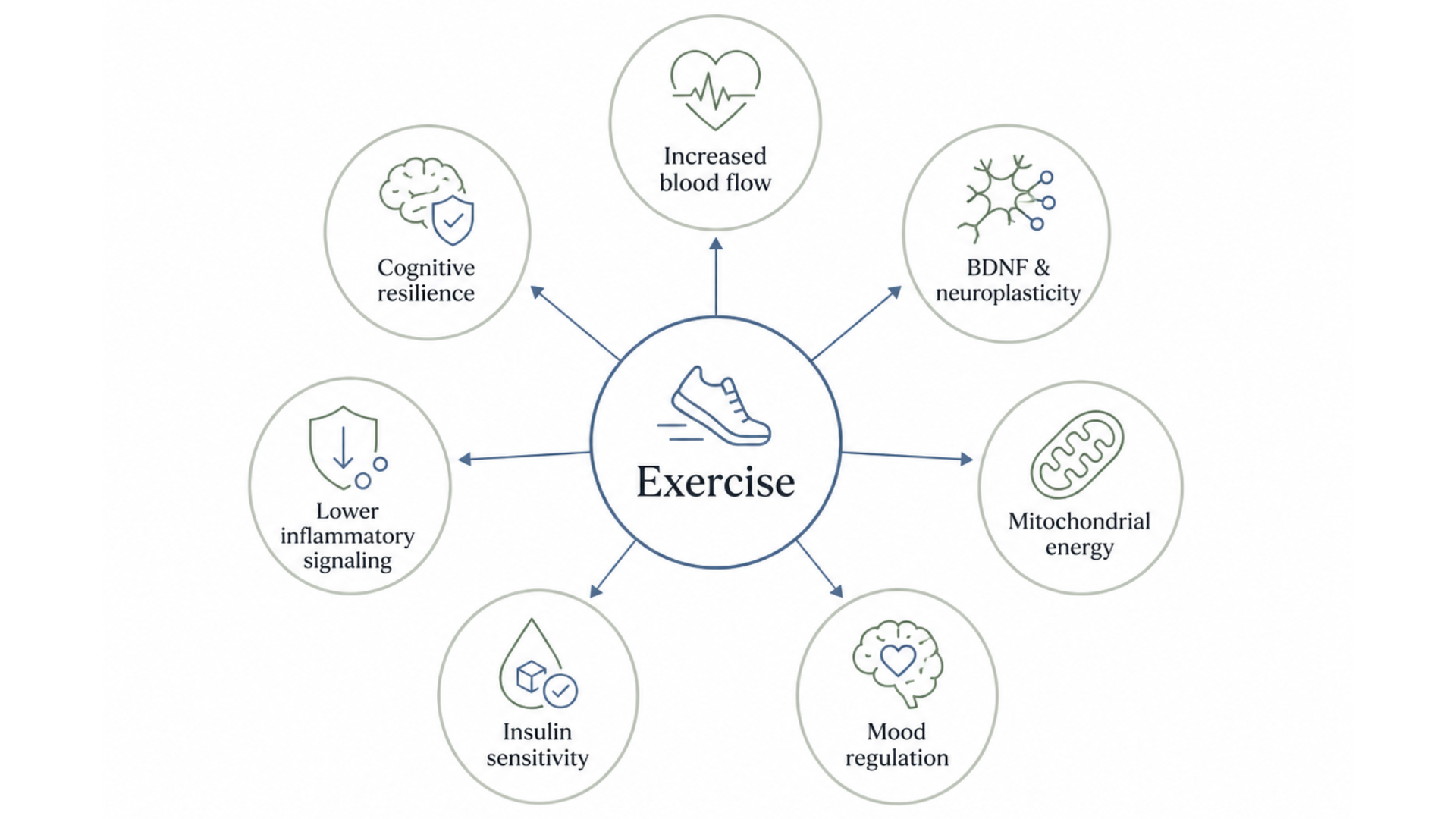
Exercise and brain health are connected through several major pathways. Regular movement may support cerebral blood flow, neuroplasticity, brain-derived neurotrophic factor, insulin sensitivity, mood regulation, inflammatory balance, and mitochondrial function.
Human research suggests physical activity is associated with better cognitive outcomes, including memory and verbal fluency. A large systematic review and meta-analysis published in JAMA Network Open found that physical activity was associated with follow-up global cognition in adults over 50.
That does not mean exercise guarantees perfect memory or prevents every brain-related condition. Biology is more complex than that. Still, movement provides adaptive signals that a sedentary lifestyle does not.
An active brain is receiving input from your cardiovascular system, nervous system, muscles, metabolism, mitochondria, and mood-regulating pathways. Over time, those inputs can shape how your brain performs.
Exercise Increases Blood Flow to the Brain
Your brain is one of the most energy-demanding organs in the body. It needs steady delivery of oxygen and nutrients, along with efficient removal of metabolic waste. Blood flow is central to that process.
Exercise increases cardiovascular demand, and over time, your vascular system adapts. Better circulation may help deliver more of what your brain needs to function well.
One study published in Brain Plasticity found that a single 20-minute session of moderate-intensity cycling increased blood flow to the hippocampus, a brain region strongly involved in memory and learning.
This is one reason walking is so underrated.
Walking does not require an expensive program, complicated tracking, or perfect motivation. It can support circulation, glucose control, mood, and stress regulation while being accessible enough to do consistently.
For many people, the best starting point is not a brutal workout. It is a 10-minute walk that becomes 20 minutes, then 30. A daily walk may not look impressive, but the brain responds to consistent signals repeated over time.
Exercise May Support BDNF and Neuroplasticity
BDNF stands for brain-derived neurotrophic factor. It is one of the key growth and repair signals studied in relation to brain health, learning, memory, and neuroplasticity.
Neuroplasticity is the brain’s ability to adapt, reorganize, and form new connections. This matters for learning new skills, maintaining cognitive function, and supporting resilience through aging.
Exercise has been studied as one of the most accessible lifestyle tools for supporting BDNF. A review in Frontiers in Neurology discusses the relationship between physical activity, BDNF regulation, neuroplasticity, and neurodegenerative disease research.
This is where nuance matters.
You may see claims like “HIIT increases BDNF by 38%”. Sometimes stats like that come from a specific study, population, workout style, or measurement window. That does not mean every person will get the same response from every workout.
Your response can depend on age, sleep, metabolic health, training status, genetics, stress load, nutrition, intensity, and recovery. High-intensity intervals may improve mental clarity for one person while overwhelming another who is under-slept, undernourished, overworked, or already stressed.
The most useful dose is the one that challenges you without crushing your recovery. Adaptation happens when the signal is strong enough to matter and recovery is sufficient enough to respond.
Exercise Supports Memory and Cognitive Function
Memory is not just a mental process. It is biological.
It depends on blood flow, neuronal communication, mitochondrial energy, inflammatory balance, glucose control, sleep quality, and neurotransmitter activity. Exercise touches many of those systems, which is why exercise and brain health keep showing up together in research on cognitive function and healthy aging.
In the same JAMA Network Open meta-analysis, physical activity was associated with better follow-up cognition, including memory-related domains.
A single workout will not suddenly transform your memory. The value comes from repeated exposure to movement that challenges the brain and body.
Exercise requires coordination, balance, reaction time, executive function, and motor control. Strength training is a great example. When you squat, hinge, press, pull, carry, or lunge, your nervous system coordinates posture, breathing, tension, movement, and attention.
That matters as you age because the goal is not just to live longer. The goal is to keep your brain and body capable enough to enjoy those years with strength, independence, and confidence.
Exercise May Help Protect Long-Term Brain Health
One of the strongest reasons to care about movement is what happens over decades.
Physical activity has been associated with a lower risk of cognitive decline and dementia in observational research. A systematic review and meta-analysis published in the British Journal of Sports Medicine found that physical activity was associated with decreased dementia incidence, while also noting important limitations like reverse causation.
That distinction matters.
Sometimes people move less because early brain changes are already happening. Researchers have to consider whether inactivity contributes to risk, or whether reduced activity can sometimes be an early sign of decline. The answer may involve both.
Still, exercise makes sense as part of a brain-protective lifestyle because it supports many systems tied to cognitive aging: vascular health, insulin sensitivity, inflammation, sleep, mood, body composition, and mitochondrial function.
Your brain does not age in isolation. It ages inside your metabolic system, cardiovascular system, immune system, endocrine system, and nervous system.
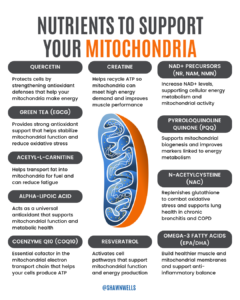
This is why mitochondrial health deserves attention. Mitochondria influence ATP production, oxidative stress, cellular resilience, and energy capacity. For anyone dealing with fatigue, brain fog, or low energy, understanding mitochondria function becomes especially relevant.
Exercise Supports Mood and Emotional Resilience
Mood is complex. Depression, anxiety, burnout, trauma, grief, and chronic stress are not solved by a generic recommendation to exercise.
At the same time, movement can be one of the most reliable ways to change your state. It gives the body an outlet for stress, increases circulation, supports sleep pressure, and can create a sense of agency when life feels heavy.
Exercise has been studied for its relationship with mood regulation and depression risk. A dose-response meta-analysis published in JAMA Psychiatry found an inverse association between physical activity and incident depression, with meaningful differences seen even at lower activity levels.
That is important because benefits do not require perfection.
A walk, a short lift, an outdoor mobility session, or even a few minutes of movement after a meal can still matter. Exercise may support mood through improved insulin sensitivity, increased blood flow, endocannabinoid signaling, dopamine and serotonin modulation, lower inflammatory signaling, and greater self-efficacy.
Sometimes the workout is not only about fitness. It is about creating momentum.
Your Brain Depends on Mitochondria
Your brain uses a lot of energy, which means mitochondrial health matters.
Mitochondria produce ATP, the energy currency your cells use to function. They also influence oxidative stress, cellular signaling, metabolic flexibility, and resilience.
Exercise is one of the strongest natural signals for mitochondrial adaptation. When you move, your body has to meet a higher energy demand. Over time, it responds by becoming more efficient, which may include improvements in mitochondrial biogenesis, oxidative capacity, and cellular energy production.
This is why exercise is much more than calorie burning. Calories are only one part of the story. The deeper story is signaling.
Exercise tells your cells to build more capacity.
A smart movement plan can support energy, focus, endurance, metabolic health, and resilience. Nutrition can either support or limit those adaptations, which is why the connection between movement, food, and cellular energy matters so much when you are trying to strengthen mitochondria through smarter nutrition.
What Type of Exercise Is Best for Brain Health?
The best plan combines movement you can do consistently with enough variety to challenge different systems: circulation, strength, coordination, mitochondrial capacity, and recovery.
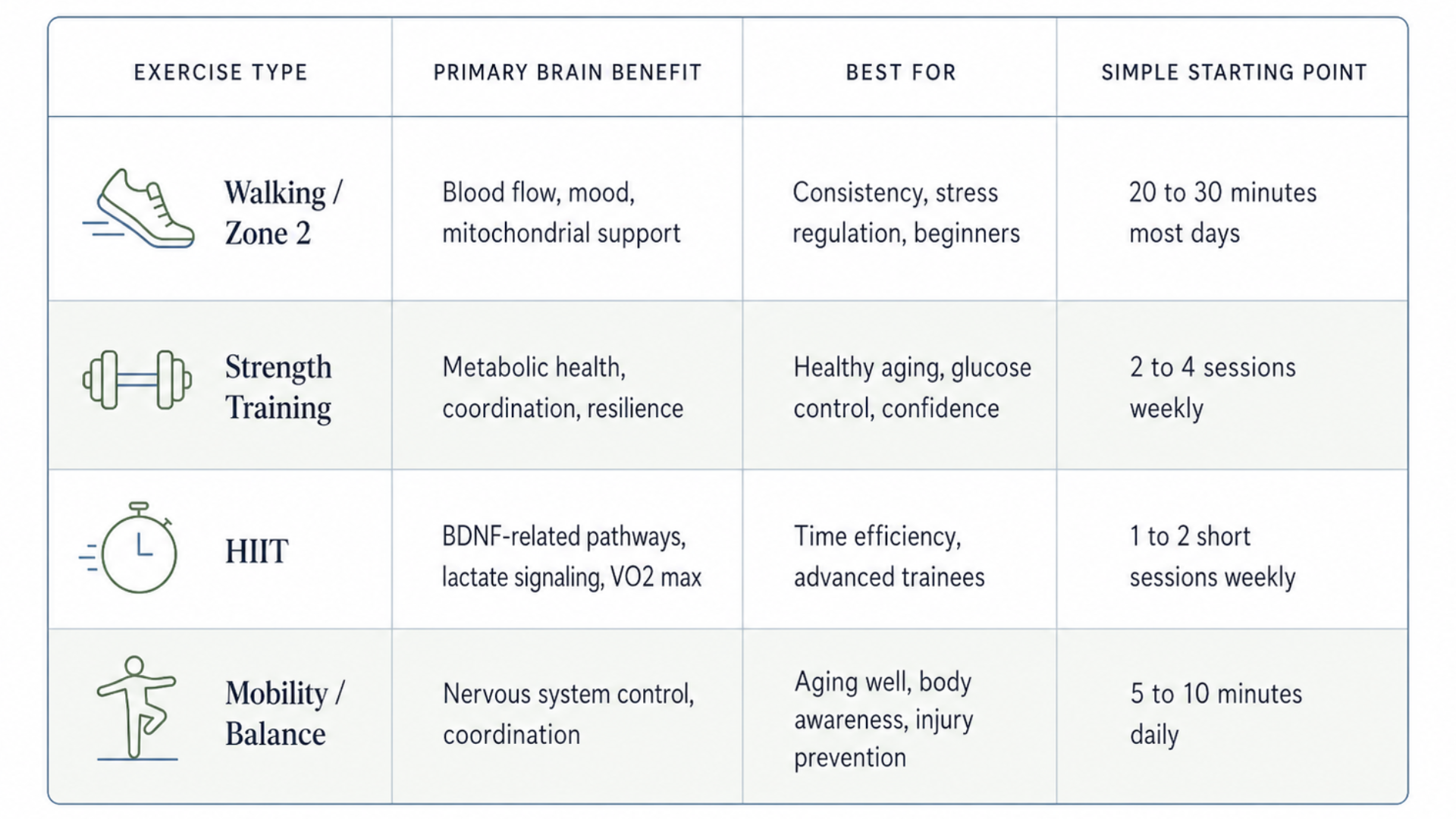
Use this as a menu, not a rigid rulebook. Start with the lowest-friction habit, usually walking, then layer in strength, mobility, and intensity as your recovery allows.
This would replace the four separate mini-sections on walking, strength, HIIT, and mobility. It makes the article sharper and more useful without losing value.
A Simple 7-Day Brain-Healthy Movement Plan
Here is a straightforward weekly structure that combines walking, strength, mobility, recovery, and intensity without overcomplicating the process.
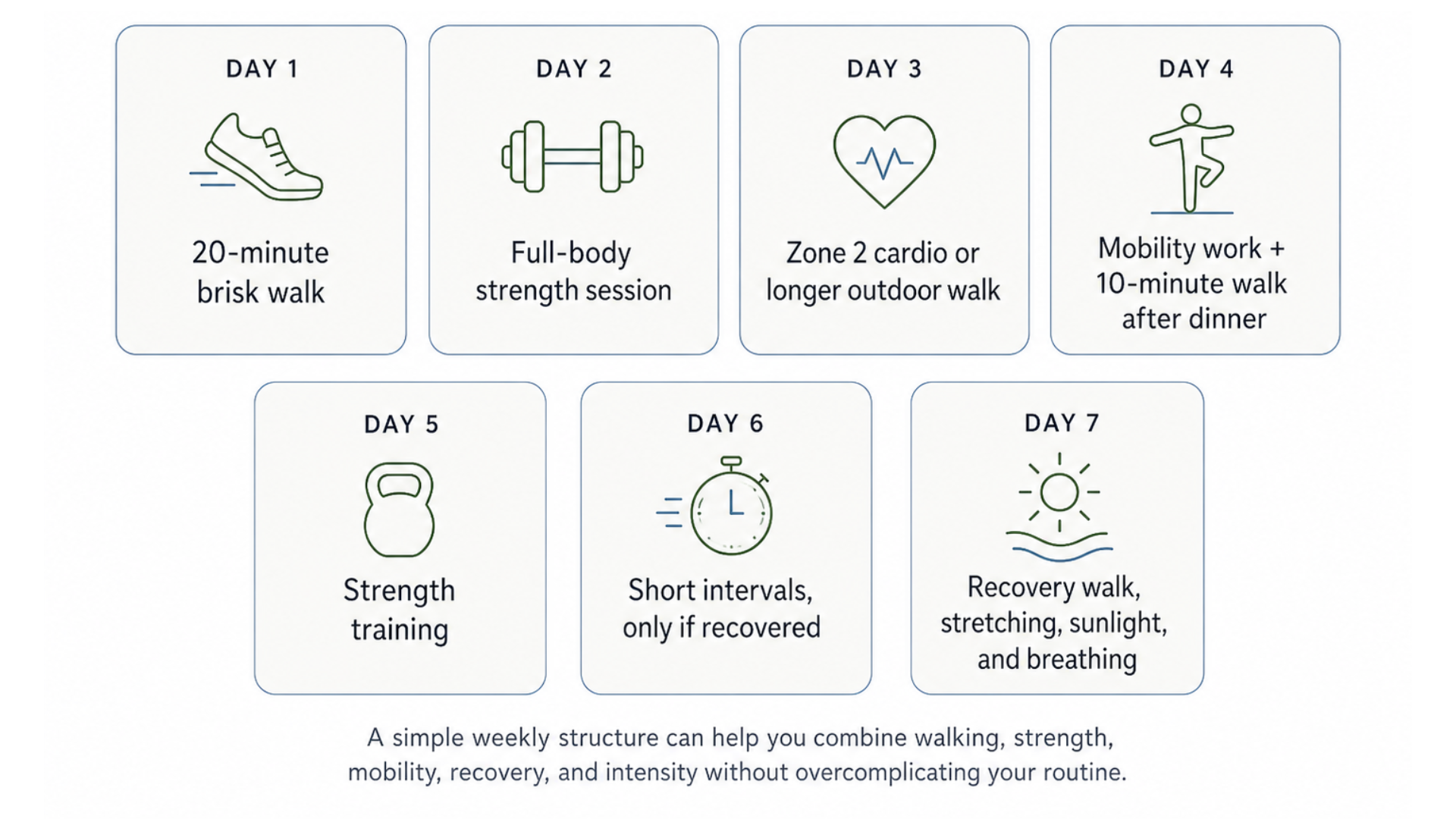
Use this as a flexible framework, not a rigid rulebook. If you are new to exercise or coming back after a break, repeat Day 1 more often before adding intensity. If you are already active, use the plan as a balanced template and adjust based on your recovery, sleep, and energy.
Track the signals that matter most:
- Morning energy
- Mood
- Focus
- Sleep quality
- Cravings
- Resting heart rate
- Workout recovery
- Mental clarity
Do not just copy someone else’s routine. Test, observe, and adjust based on your response.
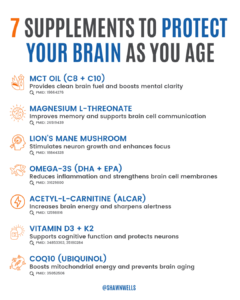
Supplements That May Support Exercise and Brain Health
Supplements are tools. Movement is the signal.
The best results come from pairing the right training inputs with recovery, nutrition, hydration, sleep, and smart supplementation when it makes sense.
No supplement replaces exercise, but the right ones may help support the systems exercise depends on, including energy production, hydration, recovery, sleep, muscle function, and inflammatory balance.
1. Creatine
Creatine is one of my favorite supplements because it sits at the intersection of muscle, brain, and energy metabolism.
It supports phosphocreatine stores, which help regenerate ATP during high-demand situations. Human trials suggest creatine may support certain aspects of cognitive performance, especially under stressors like sleep deprivation, aging, or high cognitive load, though results vary.
Creatine may be useful for supporting:
- Strength and power output
- ATP regeneration
- Muscle performance and recovery
- Cognitive performance under higher-demand conditions
Recommended products:
- Unmatched CreGAAtine powder: a creatine monohydrate and GAA blend in powder form
- Unmatched CreGAAtine capsules: the same creatine and GAA approach in capsule form
2. Magnesium
Magnesium is involved in hundreds of enzymatic reactions, including processes related to energy production, muscle function, nervous system regulation, and sleep.
For exercise and brain health, magnesium may be especially relevant because recovery is not optional. Your brain and body adapt between workouts, not just during them.
Magnesium may support:
- Muscle relaxation
- Sleep quality
- Nervous system regulation
- Energy metabolism
- Recovery from training
Different forms of magnesium may serve different purposes, which is why understanding options like glycinate, malate, threonate, and citrate can be helpful when choosing the right fit. I go deeper into those distinctions in my magnesium guide.
Product references:
3. Omega-3s
Omega-3 fatty acids, especially EPA and DHA, have been studied for their roles in cell membrane health, inflammatory balance, cardiovascular health, and brain function.
This matters because exercise creates a demand for adaptation. Your body needs the right raw materials to support that process.
Omega-3s may be worth considering for:
- Brain cell membrane support
- Cardiovascular health
- Inflammatory balance
- Long-term cognitive health
- People who rarely eat fatty fish
Product references:
- NOW Foods Omega-3: a fish oil option with EPA and DHA
- Freshfield Vegan Omega 3: an algae-based option for those avoiding fish oil
4. Electrolytes
Electrolytes matter more than many people realize, especially if you sweat, fast, eat lower carb, use sauna, train in heat, or notice headaches, fatigue, or cramping around workouts.
Sodium, potassium, and magnesium help support fluid balance, nerve conduction, muscle contraction, and performance. When electrolytes are low, the issue may not be motivation. It may be hydration and mineral balance.
Electrolytes may support:
- Hydration
- Muscle contraction
- Nerve signaling
- Exercise performance
- Recovery after sweating
- Energy during lower-carb or fasting periods
Product references:
- LMNT Electrolyte Drink Mix: a powdered electrolyte drink mix
- LMNT Sparkling Electrolyte Water: a ready-to-drink electrolyte option
Common Questions About Exercise and Brain Health
Does exercise really improve memory?
Exercise has been studied for its ability to support memory and cognitive performance through increased blood flow, neuroplasticity, BDNF-related pathways, insulin sensitivity, mood regulation, and sleep quality. Research suggests physical activity is associated with better cognitive outcomes, although results vary by person and protocol.
What is the best exercise for brain health?
The best exercise for brain health is a mix of walking or Zone 2 cardio, strength training, mobility, and occasional higher-intensity work if recovery allows. Walking supports circulation and consistency. Strength training supports metabolic health and nervous system coordination. HIIT may support lactate signaling, cardiorespiratory fitness, and BDNF-related pathways.
Is walking enough for brain health?
Walking is enough to start, and it is one of the most underrated tools for brain health. For better long-term results, combine walking with strength training, mobility, balance, and occasional intervals when appropriate.
Can too much exercise hurt brain health?
Too much exercise without enough recovery can increase stress load, impair sleep, worsen fatigue, and reduce performance. The goal is not more exercise at all costs. The goal is the right dose of movement plus enough recovery to adapt.
Build a Brain That Keeps Up With Your Life
Your brain was built for movement, challenge, recovery, and adaptation.
A body that walks, lifts, balances, breathes deeply, and recovers well gives the brain better inputs to work with. More blood flow. Better metabolic flexibility. Stronger mitochondria. Improved mood regulation. More resilience under stress.
You do not need to overhaul your entire life this week. Start with one signal.
Walk today. Lift this week. Add intensity when you are ready. Sleep like it matters. Support your mitochondria. Track how you feel.
Every rep, step, breath, and recovery day becomes part of the message.
Start small. Stay consistent. Build the brain and body you want to age with.
For more science-backed health, supplement, and performance insights each week, you can join my weekly newsletter and stay on top of your health without chasing every new trend.
References
Al Alawi, A. M., Majoni, S. W., & Falhammar, H. (2018). Magnesium and human health: Perspectives and research directions. International Journal of Endocrinology, 2018, Article 9041694.
Iso-Markku, P., Aaltonen, S., Kujala, U. M., Halme, H.-L., Phipps, D., Knittle, K., Vuoksimaa, E., & Waller, K. (2024). Physical activity and cognitive decline among older adults: A systematic review and meta-analysis. JAMA Network Open, 7(2), e2354285.
Iso-Markku, P., Kujala, U. M., Knittle, K., Polet, J., Vuoksimaa, E., & Waller, K. (2022). Physical activity as a protective factor for dementia and Alzheimer’s disease: Systematic review, meta-analysis and quality assessment of cohort and case-control studies. British Journal of Sports Medicine, 56(12), 701–709.
Pearce, M., Garcia, L., Abbas, A., Strain, T., Schuch, F. B., Golubic, R., Kelly, P., Khan, S., Utukuri, M., Laird, Y., Mok, A., Smith, A., Tainio, M., Brage, S., & Woodcock, J. (2022). Association between physical activity and risk of depression: A systematic review and meta-analysis. JAMA Psychiatry, 79(6), 550–559.
Romero Garavito, A., Díaz Martínez, V., Juárez Cortés, E., Negrete Díaz, J. V., & Montilla Rodríguez, L. M. (2025). Impact of physical exercise on the regulation of brain-derived neurotrophic factor in people with neurodegenerative diseases. Frontiers in Neurology, 15, Article 1505879.
Sawka, M. N., Burke, L. M., Eichner, E. R., Maughan, R. J., Montain, S. J., & Stachenfeld, N. S. (2007). American College of Sports Medicine position stand: Exercise and fluid replacement. Medicine & Science in Sports & Exercise, 39(2), 377–390.
Steventon, J. J., Foster, C., Furby, H., Helme, D., Wise, R. G., & Murphy, K. (2020). Hippocampal blood flow is increased after 20 min of moderate-intensity exercise. Cerebral Cortex, 30(2), 525–533.
Xu, C., Bi, S., Zhang, W., & Luo, L. (2024). The effects of creatine supplementation on cognitive function in adults: A systematic review and meta-analysis. Frontiers in Nutrition, 11, Article 1424972.
Share

Who is Shawn Wells?
Although I’ve suffered from countless issues, including chronic pain, auto-immunity, and depression, those are the very struggles that have led me to becoming a biochemist, formulation scientist, dietitian, and sports nutritionist who is now thriving. My personal experiences, experiments, and trials also have a much deeper purpose: To serve you, educate you, and ultimately help you optimize your health and longevity, reduce pain, and live your best life.


ORDER THE ENERGY FORMULA
Discover the 6 foundational pillars to cultivate a more caring, compassionate, connected, unified and purpose-filled life.
Hardcover, Audible & EBook Available!
UNLEASH YOUR UNLIMITED POTENTIAL
