
How to Support Mood in Winter Using Light, Sleep, and Targeted Supplements

Winter can make you feel like you are running on low battery. Mornings feel heavier. Focus is slower. Motivation drops. Sleep gets weird. Cravings get louder. If you are looking for winter mood support supplements, it usually means you have noticed the pattern and you want a plan that is simple and evidence-aware, not random.
This is education, not medical advice. If your mood feels severe or unsafe, or you think you may have a clinical condition, talk with a qualified clinician.
How to Feel Happier During Winter: Start with What Your Brain Expects
Most people jump straight to “What is the best supplement for winter depression?” I get why. It feels like the fastest lever.
But winter mood is often driven by basics that quietly shift at the same time: less morning light, later sleep timing, less movement, and more screen time. When those drift, your brain can feel off even if you are doing a lot right.
Light is one of the most studied levers. Human trials and meta-analyses suggest bright light may support mood for some people when used consistently and timed well, especially in seasonal patterns. If you want to see what has been studied, start with this bright light therapy review in JAMA Psychiatry.
Step 1: Fix Light First (My Non-Negotiable)
If you only do one thing from this post, do this.
Every morning for 7 days:
- Get outside within 60 minutes of waking.
- Stay out 5-10 minutes if it is bright, 10-20 minutes if it is cloudy.
- Skip sunglasses for that short window unless you need them for safety.
This is not about “getting vitamin D”. Through a window, you miss key wavelengths. This is about telling your brain, “It is daytime”.
If outside light is not realistic, a light box can be an option. This network meta-analysis on seasonal mood patterns is a strong overview of what researchers have compared.
Step 2: Build A Winter-Stable Day with 3 Anchors
These anchors are boring on purpose. They work because they reduce the daily swings that make winter feel harder.
- Anchor A: Protein at breakfast
Aim for 25-35 grams. This supports steadier energy and fewer cravings. Keep it simple: eggs, Greek yogurt, cottage cheese, a protein smoothie, or leftovers. - Anchor B: A 10-minute walk after lunch
This is one of the fastest reset buttons I know. It supports glucose control and helps your brain wake up again. - Anchor C: A hard stop on bright screens at night
Winter nights are longer, and screens fill the gap. If screens are a big part of your winter routine, read my guide on reverse digital fatigue brain fog and get focus back.
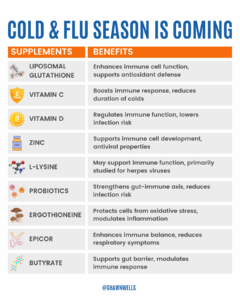
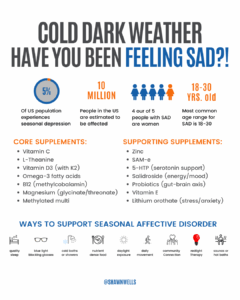
Winter Mood Support Supplements: What Supplement Should You Take During Winter?
Now we can talk supplements.
Here is the big idea: winter mood support supplements work best when the basics are not a mess. Think “support”, not “rescue”. If your sleep is chaotic and you never see morning light, no capsule will fully fix that.
When people ask, “What supplement should you take during winter?” I think in layers:
- Fill common winter gaps (especially vitamin D status)
- Support sleep quality and tension (often magnesium)
- Support brain nutrition (often omega-3s)
- Consider optional tools based on lifestyle (like creatine)
I also keep the list short on purpose. Consistency beats complexity.
Vitamins for Winter: The Ones That Matter Most
A lot of people search vitamins for winter, vitamins for seasonal depression, and best vitamins for mood. In practice, I focus on a few nutrients that are commonly low in winter, then I tailor based on diet, lifestyle, and labs when available. The goal is not to chase a “happy pill”. The goal is to remove common winter bottlenecks that can make mood, energy, and focus feel worse.
Vitamin D for mood in winter
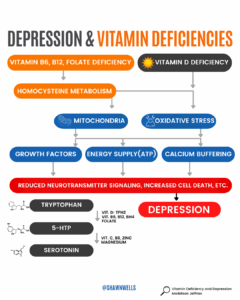
Vitamin D is one of the top nutrients that can drift low in winter, especially if you live in northern states, work indoors, or rarely get midday sun. Because of that, vitamin D has been studied for mood-related outcomes. Results are mixed, and a big reason is baseline status. If your level is already adequate, extra vitamin D may not move the needle. If you are low, correcting that gap may support better resilience.
That is why I prefer a test-first approach when possible. If you can, ask your clinician about checking 25(OH)D. If you cannot test, a conservative, clinician-guided daily plan is usually smarter than random high doses.
For dosing guardrails and who may benefit most, this Endocrine Society vitamin D guideline is a useful reference point.
If you want more detail on forms, dosing logic, and what matters on labels, use my Vitamin D guide.
Which vitamin D for seasonal depression? Vitamin D or D3 for seasonal depression?
These questions come up a lot, and the answer should be simple.
Most over-the-counter supplements in the US use vitamin D3 (cholecalciferol). Vitamin D2 (ergocalciferol) is another form and is sometimes used in prescriptions. In general, D3 is the most common choice for raising and maintaining vitamin D status, but your best option still depends on your needs, labs, and clinician guidance.
One important clarification: vitamin D is not a guaranteed mood fix, and it should not be positioned as a treatment for depression. Think of vitamin D as a foundational nutrient. If you are low, correcting that deficiency may support mood and energy in winter. If you are not low, it may not change much.
Recommended vitamin D3 products:
Which Supplement Is Best for Mood Swings?
Mood swings are usually not one thing. For many people, winter “mood swings” are really a stack of:
- Poor sleep quality
- More stress and less recovery
- Bigger blood sugar swings from comfort foods
- Less movement and less daylight
So instead of asking “Which supplement is best for mood swings?” I ask: what is driving your swings?
If it is sleep and tension, magnesium is often a smart place to start.
Magnesium for Winter Tension and Sleep Quality
Magnesium is not a knockout pill. I think of it as a mineral that helps your nervous system settle down when winter stress has you feeling tense, restless, or “tired but wired”. In real life, that matters because winter mood issues often start with sleep getting lighter, shorter, or more fragmented. When sleep slips, mood swings usually get louder.
That is why magnesium shows up in the winter conversation. It has been studied for sleep health and sleep-related outcomes, but results can vary based on magnesium status, the form used, the dose, and who is being studied. A systematic review on magnesium and sleep health found observational studies often link magnesium status with sleep quality, while randomized trials show mixed and uncertain results. Translation: magnesium may support sleep for some people, especially if intake is low, but it is not a guaranteed fix.
Practical context that actually helps:
- If you wake up tense or clench your jaw at night, magnesium may be a better fit than if your issue is purely schedule chaos.
- If magnesium makes you groggy the next morning, take it earlier in the evening or lower the dose.
- If it upsets your stomach, switch forms or split the dose.
- If you have kidney disease or take certain medications, check with a clinician first.
Recommended magnesium products:
- NatureBell Magnesium Glycinate
- Double Wood Magnesium Glycinate
- Doctor’s Best High Absorption Magnesium Glycinate Lysinate
If you want help choosing forms and making sense of labels, my Magnesium guide walks you through the options without the guesswork.
Omega-3s and The “Best Vitamins for Mood” Conversation
Omega-3s are not vitamins, but they often show up when people search for best vitamins for mood or vitamins for seasonal depression. That happens because omega-3 fats are a major structural part of the brain, and they have been studied for mood-related outcomes in adults.
Here is the key context: omega-3 research is not “one supplement, one result”. Outcomes can depend on baseline fish intake, dose, and the EPA-to-DHA balance. In many trials, EPA-forward formulas have been studied more for mood support than DHA-heavy blends, but results are still mixed across the full body of evidence.
If you want a strong starting point, read the omega-3 systematic review and meta-analysis in BJPsych Open. The fair takeaway is that omega-3s have been studied, and they may support some people, not omega-3s treat depression.
Food-first still wins:
- Aim for fatty fish a couple times per week if you can.
- If you do not eat fish, a quality supplement may make sense, especially during winter when routines slip.
Recommended omega-3 products:
- NOW Foods Omega-3 180 EPA / 120 DHA
- MAV Nutrition Triple Strength Omega-3 Fish Oil
- Freshfield Naturals Vegan Omega-3
Safety note: if you take blood thinners, have a bleeding disorder, are pregnant, or have surgery coming up, talk with a clinician before using omega-3 supplements.
Creatine: A Useful Option for Winter Brain Drag
Creatine is famous for training, but it is also about cellular energy. Your brain is a heavy energy user, and it needs fast ATP turnover to stay sharp. When winter stress piles on, sleep gets lighter, and routines get messy, that “brain drag” feeling often shows up first.
I put creatine in the “optional but useful” category if:
- You train consistently
- You eat low red meat
- You feel mentally taxed in winter
Recommended creatine products:
- SteelFit Creapure Creatine Monohydrate Powder
- Nutricost Creapure® Creatine Monohydrate Powder
- Nutricost Creatine Monohydrate Micronized Powder
- Muscle Feast Creatine Monohydrate Powder
- BulkSupplements Creatine Monohydrate Powder
So why is creatine being discussed outside the gym? Because researchers have looked at it as an add-on tool in mood research, not as a stand-alone cure. In one placebo-controlled human trial in women taking an SSRI, adding creatine was linked to faster and greater improvement in depressive symptom scores compared to placebo. You can see the full paper in the American Journal of Psychiatry creatine augmentation trial.
That does not mean creatine treats depression. It means creatine has been studied for brain-related outcomes, and some human trials suggest it may support resilience when energy demand is high. If you have diagnosed depression or symptoms that feel severe, creatine should never replace professional care.
If you want to use creatine in a simple, no-hype way, download my Creatine Guide for the forms that matter, practical dosing, and the common mistakes that waste time and money.
L-Ergothioneine for Winter Resilience
People ask me a version of this every winter: “What supplement should you take during winter when your mood feels more fragile?” Besides the basics like light and sleep, L-ergothioneine is one of the more interesting “quiet support” nutrients to consider.
L-ergothioneine is a sulfur-containing amino acid found mostly in mushrooms. What makes it unique is that your body has a dedicated transporter for it, which helps it build up in tissues that care about oxidative stress balance, including the brain. If you want the science background, start with this open-access overview on ergothioneine and why it is treated like a special dietary antioxidant.
So, does it fix winter low mood? No. That is not what the evidence can claim. But it has been studied for human sleep and brain-related outcomes that often slide in winter, like sleep quality and mental stamina. For example, this human trial in the Journal of Functional Foods on ergothioneine and sleep difficulties found improvements in sleep difficulty measures in stressed, sleep-complaint volunteers. And a newer placebo-controlled trial in older adults reported changes in sleep initiation and some cognitive measures in certain groups, which you can read in this clinical trial paper on ergothioneine, cognition, and sleep.
Food-first still wins here. If you can, eat mushrooms a few times per week. If you never eat mushrooms, a supplement can be a practical option, especially when winter routines get messy.
My straightforward take:
- L-ergothioneine is a smart “winter resilience” add-on, not a rescue pill.
- It may support sleep-related and brain-related outcomes for some people, based on early human trials.
- It should never replace professional care if your mood feels severe, unsafe, or clinically concerning.
Recommended L-ergothioneine products:
- Life Extension Essential Youth L-Ergothioneine
- Real Mushrooms Ergo+ L-Ergothioneine
- XYMOGEN MitoPrime
A 7-Day Plan That Makes Winter Mood Support Supplements Work Better
Here is a plan that is simple and measurable.
- Day 1: Light
Morning outdoor light. - Day 2: Food
Protein at breakfast. - Day 3: Movement
10-minute walk after lunch. - Day 4: Sleep
Pick a bedtime. Set a screen cutoff 60 minutes before. - Day 5: Magnesium
Add magnesium at night if sleep is the weak link. - Day 6: Vitamin D
Use a test-first approach when possible, then follow clinician guidance. - Day 7: Omega-3s or creatine
Choose one based on diet and lifestyle. Track how you feel for 2 weeks.
Safety Notes
- If you have diagnosed depression, suspect seasonal affective disorder, or feel unsafe, talk to a clinician. Supplements are not a substitute for care.
- If you take blood thinners, have a bleeding disorder, are pregnant, or have upcoming surgery, talk to your clinician before omega-3 supplements.
- If you have kidney disease or other medical conditions, ask before starting creatine.
- Vitamin D can be overdone. Avoid stacking high-dose products casually.
- If you have eye conditions, bipolar disorder, or take meds that increase light sensitivity, talk with your clinician before using a light box.
The Bottom Line
If you want fewer winter crashes, steadier focus, and a mood that feels more like you, start with light and daily anchors. Then use winter mood support supplements to fill real gaps instead of guessing.
If you want help staying on top of your health each week, I share practical, science-backed tips and simple routines in my weekly newsletter.
Share

Who is Shawn Wells?
Although I’ve suffered from countless issues, including chronic pain, auto-immunity, and depression, those are the very struggles that have led me to becoming a biochemist, formulation scientist, dietitian, and sports nutritionist who is now thriving. My personal experiences, experiments, and trials also have a much deeper purpose: To serve you, educate you, and ultimately help you optimize your health and longevity, reduce pain, and live your best life.


ORDER THE ENERGY FORMULA
Discover the 6 foundational pillars to cultivate a more caring, compassionate, connected, unified and purpose-filled life.
Hardcover, Audible & EBook Available!
UNLEASH YOUR UNLIMITED POTENTIAL
