
14 Best Workout Supplements for Energy, Strength & Recovery

Most people start looking for the best workout supplements when something in their training is not working as well as it should. Their energy fades too early, strength stops progressing, muscles tire before the workout is over, or recovery begins taking longer than expected.
Those problems do not all have the same solution. An ingredient that supports mental focus serves a different purpose from one that improves muscular endurance, blood flow, strength, or protein synthesis. The dose and timing also determine whether a supplement has a reasonable chance of helping.
After more than 20 years formulating supplements, I have learned to look past the claims on the front of the label. What matters is whether the ingredient has a clear purpose, whether the formula provides enough of it, and whether it fits the way you train.
Here are 14 workout supplements worth understanding, along with the practical doses and timing used for each one.
The doses below are general ranges for healthy adults. Speak with your healthcare professional before adding a supplement if you take medication, have a health condition, or are pregnant or breastfeeding.
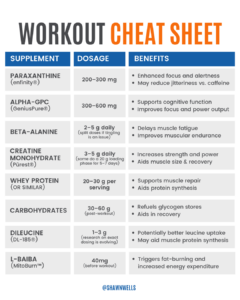
1. Paraxanthine (enfinity®)
Paraxanthine is the primary active metabolite your body produces when it breaks down caffeine. It interacts with adenosine signaling involved in alertness and perceived fatigue, making it useful for maintaining attention, reaction time, and mental energy during training.
In a randomized, double-blind human trial comparing paraxanthine with caffeine, paraxanthine supported several measures of cognitive performance before and after exercise, including attention, memory, and reaction time. It can be especially useful when sustained focus is a priority during demanding workouts.
- Best for: Focus, alertness, and mental energy
- Typical dose: 200-300 mg
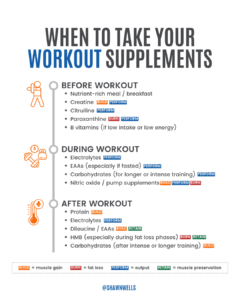
- Timing: 30-60 minutes before exercise
Recommended Products:
- Life Cider X Paraxanthine Energy Drink – The most convenient choice for steady energy and sharper focus in a ready-to-drink format before training or during a busy day.
- MTE® Daily Energy & Wellness Everyday Blend – A good fit for daily use when you want broader support for energy, focus, mood, and recovery beyond the workout itself.
- Unmatched Paraxanthine – A simple, targeted option for adding paraxanthine to an existing workout stack without committing to a more complex formula.
2. Alpha-GPC (GeniusPure®)
Alpha-GPC is a concentrated source of choline. Your body uses choline to produce acetylcholine, a neurotransmitter involved in attention, memory, nerve signaling, and communication between your nervous system and muscles.
In a controlled human trial, 600 mg of Alpha-GPC increased lower-body force production after 6 days of use. Its combination of cognitive and neuromuscular support makes it particularly relevant for workouts that require concentration, power, speed, and precise movement.
- Best for: Cognitive function, focus, and power output
- Typical dose: 300-600 mg
- Timing: 30-60 minutes before exercise
3. Beta-Alanine
Beta-alanine helps your body produce carnosine, a compound stored in skeletal muscle. Carnosine helps buffer the rise in acidity that occurs during demanding exercise, which may delay muscular fatigue and help you sustain a hard effort for longer.
Beta-alanine works through consistent daily use rather than as an immediate pre-workout. Muscle carnosine gradually increases over several weeks, making beta-alanine especially useful for intervals, circuits, repeated sprints, and other intense efforts. Research has found that beta-alanine supplementation increases muscle carnosine and may support high-intensity exercise performance.
- Best for: Delaying fatigue and improving muscular endurance
- Typical dose: 2-5 grams daily, divided into smaller doses to reduce tingling
- Timing: Any time of day. Consistent daily intake matters more than taking it immediately before exercise
4. Creatine Monohydrate (Pürest®)
Creatine increases the amount of phosphocreatine stored in your muscles. Phosphocreatine helps restore ATP, the immediate energy source used during lifting, sprinting, jumping, and other short bursts of intense activity.
Consistent creatine monohydrate use has been studied for improving strength, power, training capacity, and lean mass when combined with resistance training. It is also one of the most widely researched supplements for physical performance across the lifespan. My free creatine guide covers its benefits, forms, and common myths in greater detail.
- Best for: Strength, power, muscle size, and training capacity
- Typical dose: 3-5 grams daily. An optional loading phase uses 20 grams daily, divided into four 5-gram servings, for 5-7 days
- Timing: Any time of day. Consistency matters more than taking it immediately before or after exercise
Recommended Products:
- One Sol Creatine+ – A female-focused creatine blend with added leucine, designed around lower-body strength, muscle growth, and workout recovery.
- Forzagen Creatine Monohydrate Powder – A straightforward, unflavored micronized creatine monohydrate powder for anyone who wants a simple option that mixes easily into water or a shake.
5. Whey Protein or a Similar Complete Protein
Whey protein provides all 9 essential amino acids and is naturally rich in leucine. These amino acids supply the building blocks your body needs to repair muscle tissue and produce new muscle proteins after training.
Protein powder is most useful when a full meal is not practical or your usual diet falls short of your daily needs. Research suggests that most active adults can support muscle maintenance and growth with approximately 1.4 to 2.0 grams of protein per kilogram of body weight each day. Total intake across the day is more important than drinking a shake within minutes of your final set.
- Best for: Muscle repair, muscle protein synthesis, and meeting daily protein needs
- Typical dose: 20-30 grams per serving, adjusted for body size, age, and total daily protein intake
- Timing: After exercise or whenever needed to meet your daily protein target. Total daily intake matters more than a narrow post-workout window
6. Carbohydrates
Carbohydrates provide glucose and help replenish glycogen stored in your muscles. Glycogen is an important fuel source during prolonged activity, high-volume resistance training, repeated sprints, and other demanding workouts.
Supplemental carbohydrates become most useful when a session is long enough or intense enough to significantly reduce glycogen, or when another hard workout is approaching. A systematic review of carbohydrate intake and resistance training found that additional carbohydrates are more likely to support performance when training volume is high or glycogen availability is limited.
- Best for: Refueling glycogen stores and supporting recovery
- Typical dose: 30-60 grams, adjusted for body size and training volume
- Timing: After long or high-volume training, especially when another demanding session is approaching
7. Dileucine (DL-185®)
Dileucine is a dipeptide made from 2 linked leucine molecules. Leucine plays a central role in activating the signals involved in muscle protein synthesis, while the dipeptide structure gives dileucine a distinct route of absorption and delivery.
In a double-blind, randomized human trial, 2 grams of dileucine taken during a resistance-training program supported greater improvements in lower-body strength and muscular endurance than leucine or a placebo. Dileucine can be used alongside an adequate complete protein intake to provide targeted support for muscle protein synthesis and training adaptation.
- Best for: Muscle protein synthesis, strength, and muscular endurance
- Typical dose: 1-3 grams daily. The cited resistance-training trial used 2 grams
- Timing: Daily or around resistance training
Recommended Products:
- MuscleTech Peptide 185™ – A convenient capsule option providing 2 grams of DL-185® dileucine per serving to support muscle protein synthesis, strength, repetitions to failure, and post-training recovery.
- Unmatched Dileucine – A standalone dileucine formula suited to those focused on building muscle, increasing strength, and supporting muscular endurance and recovery.
8. L-BAIBA (MitoBurn™)
L-BAIBA is an exercise-related signaling metabolite produced by active skeletal muscle. It forms part of the communication network between muscle and other tissues, including fat tissue. Preclinical models suggest that it may influence pathways involved in fat oxidation, energy expenditure, and metabolic adaptation to exercise.
Human research is now examining how supplemental L-BAIBA may complement exercise and nutrition. In a 56-day human trial of L-BAIBA, researchers assessed resting metabolism, body composition, appetite, mood, and related markers. Participants taking L-BAIBA alone reported lower perceived hunger, adding human data to the earlier research on its metabolic role.
- Best for: Fat metabolism, exercise-related metabolic signaling, and energy expenditure
- Typical dose: 40 mg
- Timing: Before exercise
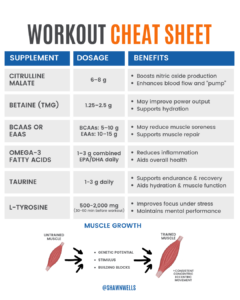
9. Citrulline Malate
Citrulline helps increase the availability of arginine, which your body uses to produce nitric oxide. Nitric oxide helps blood vessels relax and supports blood flow to working muscles. Malate also participates in pathways involved in cellular energy production.
Human trials suggest that citrulline supplementation may support nitric oxide production, muscle blood flow, repetition performance, training volume, and perceived recovery after demanding exercise. A review of citrulline and exercise performance examined its use across resistance, strength, and endurance settings.
- Best for: Nitric oxide production, blood flow, muscle pump, and training volume
- Typical dose: 6-8 grams. Check the label for the actual L-citrulline content and citrulline-to-malate ratio
- Timing: 30-60 minutes before exercise
10. Betaine (TMG)
Betaine, also called trimethylglycine or TMG, functions as both an osmolyte and a methyl donor. As an osmolyte, it helps cells maintain fluid balance. As a methyl donor, it contributes to metabolic processes involved in normal cellular and muscular function.
Betaine has been studied for power output, strength, muscular endurance, and body composition. Its roles in cellular hydration and methylation make it especially relevant during demanding resistance or high-intensity training. A systematic review and meta-analysis of betaine supplementation assessed its effects across several areas of exercise performance.
- Best for: Power output, training performance, and cellular hydration
- Typical dose:25-2.5 grams daily, taken as one serving or divided between meals
- Timing: Take daily. Consistency matters more than precise pre-workout timing
11. BCAAs or EAAs
BCAAs provide leucine, isoleucine, and valine, 3 essential amino acids involved in muscle metabolism and recovery. EAAs include the complete group of nine essential amino acids that your body cannot produce and must obtain through food or supplements.
BCAAs can be convenient during training, between meals, or when protein intake is limited. EAAs provide broader support for muscle protein synthesis because they supply all 9 essential amino acids needed to build new muscle protein. The International Society of Sports Nutrition position stand on EAAs describes their role in skeletal muscle maintenance, performance, and recovery.
- Best for: Muscle repair, recovery, and supporting protein synthesis
- Typical dose: 5-10 grams of BCAAs or 10-15 grams of EAAs
- Timing: Before, during, or after exercise when a complete protein serving is not practical
12. Omega-3 Fatty Acids
The primary omega-3 fatty acids in fish oil are EPA and DHA. They become part of cell membranes and support normal inflammatory signaling, cardiovascular health, brain health, and several processes involved in exercise recovery.
Regular EPA and DHA intake may help reduce soreness after demanding or unfamiliar exercise. Omega-3s have also been studied for muscle function and the response to resistance training, particularly when dietary intake is low. A systematic review and meta-analysis of omega-3 supplementation examined its effects on muscle soreness following eccentric exercise.
- Best for: Exercise recovery, muscle soreness, and overall health
- Typical dose: 1-3 grams of combined EPA and DHA daily, not 1-3 grams of total fish oil
- Timing: Daily with a meal
13. Taurine
Taurine is an amino-sulfonic acid found in high concentrations in skeletal muscle. It supports cellular hydration, calcium handling, energy metabolism, and normal muscle contraction. Despite being included in many energy drinks, taurine is not a stimulant.
Human research has examined taurine for endurance, strength, power, muscle soreness, and recovery. Its involvement in cellular hydration and muscle function makes it relevant both during exercise and throughout the recovery period that follows. A review of taurine in sports and exercise evaluated its effects across aerobic performance, anaerobic performance, soreness, and recovery.
- Best for: Endurance, recovery, cellular hydration, and muscle function
- Typical dose: 1-3 grams daily
- Timing: Take daily or approximately 1-2 hours before exercise, depending on the intended use
14. L-Tyrosine
L-tyrosine is an amino acid your body uses to produce dopamine, norepinephrine, and other catecholamines involved in attention, motivation, and the response to stress. Its role during training is primarily related to mental performance rather than direct muscle growth.
L-tyrosine has been studied for maintaining attention and cognitive performance when the brain is challenged by acute stress, heat, prolonged mental effort, or inadequate sleep. This makes it particularly relevant before workouts that require concentration, coordination, and mental drive under demanding conditions. A controlled study found that tyrosine supported cognitive performance during extended nighttime work and sleep loss.
- Best for: Focus and mental performance under stress
- Typical dose: 500-2,000 milligrams
- Timing: 30-60 minutes before exercise
Frequently Asked Questions
What are the best workout supplements for beginners?
Creatine monohydrate and a complete protein supplement are strong starting points. Add other ingredients only when they match a specific goal, such as paraxanthine for focus, beta-alanine for muscular endurance, or carbohydrates for longer training sessions.
What should I take before a workout?
Choose based on what you want to improve. Paraxanthine, Alpha-GPC, and L-tyrosine may support focus, while citrulline malate, taurine, and L-BAIBA target blood flow, muscle function, or metabolic support.
Creatine, beta-alanine, betaine, and omega-3s work better through consistent use than precise pre-workout timing. My guide to supplement timing and absorption explains this in more detail.
What should I take after a workout?
Protein helps support muscle repair, while carbohydrates help restore glycogen after demanding exercise. Dileucine, EAAs, or BCAAs may provide additional amino acid support when a full meal is not practical.
Is creatine better before or after exercise?
Neither timing has a clear advantage for most people. Consistent daily use matters more, so take creatine at the time you are most likely to remember it.
Are BCAAs or EAAs better for muscle growth?
EAAs provide all 9 essential amino acids needed for muscle protein synthesis, while BCAAs provide only 3. BCAAs can still be useful during training or between meals, but EAAs offer more complete support.
Can I combine several workout supplements?
Yes, as long as the ingredients serve different purposes and the doses are clearly listed. Introduce new supplements gradually so you can judge their effects on performance, digestion, energy, and sleep.
My guide to reading supplement labels can help you spot hidden doses and proprietary blends.
Do women and men need different workout supplements?
Most workout supplements work through the same mechanisms in women and men. Body size, diet, training style, stimulant tolerance, health status, and goals are usually more important than gender.
How long should I use a supplement before judging the results?
Some ingredients, including paraxanthine, Alpha-GPC, citrulline malate, and L-tyrosine, may be assessed during individual workouts. Creatine, beta-alanine, betaine, omega-3s, and daily amino acid strategies need more consistent use before you judge their effects.
Choosing the Right Workout Supplements
The best workout supplements address a clear need in your training.
Paraxanthine, Alpha-GPC, and L-tyrosine support the mental side of performance. Beta-alanine, creatine, citrulline malate, betaine, and taurine target different parts of muscular performance. Protein, carbohydrates, dileucine, BCAAs, EAAs, and omega-3s support the repair and adaptation that take place outside the gym.
L-BAIBA adds another dimension by supporting exercise-related metabolic signaling and pathways involved in fat metabolism and energy expenditure.
You do not need every ingredient on this list. Decide what you want to improve, use an appropriate dose, and give the supplement enough time to show how well it fits your routine.
For practical, science-backed insights that help you make smarter decisions about supplements and long-term health, join my weekly newsletter. Each week, I share useful strategies to help you stay on top of your health.
Share

Who is Shawn Wells?
Although I’ve suffered from countless issues, including chronic pain, auto-immunity, and depression, those are the very struggles that have led me to becoming a biochemist, formulation scientist, dietitian, and sports nutritionist who is now thriving. My personal experiences, experiments, and trials also have a much deeper purpose: To serve you, educate you, and ultimately help you optimize your health and longevity, reduce pain, and live your best life.



ORDER THE ENERGY FORMULA
Discover the 6 foundational pillars to cultivate a more caring, compassionate, connected, unified and purpose-filled life.
Hardcover, Audible & EBook Available!
UNLEASH YOUR UNLIMITED POTENTIAL
