
My Top 10 Best Supplements for Sleep
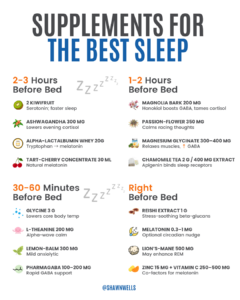
Best supplements for sleep are the ones that match your pattern, not the trend of the week. Some people cannot fall asleep because their mind is still running. Others fall asleep fine, then pop awake at 3 a.m. like a switch flipped. Different problem, different tool.
I formulate for a living, and I also run this like an experiment in my own life. I want sleep support that helps me feel steady at night and sharp in the morning, without feeling drugged.
Here are my top 10.
Fast Picks by Sleep Pattern
- Trouble falling asleep: glycine, L-theanine
- Tense body at night: magnesium glycinate
- 2-4 a.m. wake-ups: magnesium glycinate, then tart cherry
- Jet lag or a late bedtime pattern: low-dose melatonin
1. Magnesium Glycinate
Magnesium is an essential mineral involved in muscle relaxation, nerve signaling, and stress response. When magnesium is low, people often describe tight muscles, twitchiness, and a harder time “downshifting” at night.
Magnesium glycinate is magnesium bound to glycine. It is a form many people tolerate well, which matters when you’re taking it nightly.
Human research suggests magnesium bisglycinate may modestly improve insomnia severity in adults who already report poor sleep.
Dose + timing:
- A common magnesium glycinate for sleep dosage lands around 200-300 mg elemental magnesium
- Start: 100-200 mg elemental magnesium
- Common range: 200-300 mg elemental magnesium
- When: 30-90 minutes before bed
If you want the details on forms, labels, and what “elemental magnesium” actually means, my Magnesium Guide walks you through it.
Recommended magnesium glycinate options:
- Pure Encapsulations Magnesium (Glycinate)
- Doctor’s Best High Absorption Magnesium Glycinate Lysinate
Cautions: If you have kidney disease, do not self-experiment. If you take prescriptions, spacing minerals away from certain meds may matter.
2. Glycine
Glycine is an amino acid your body uses to build proteins and support nervous system balance. For sleep, it tends to feel like a gentle “cooling” effect. Many people notice easier sleep onset and better next-morning clarity.
The human research that gets cited most often used 3 g before bed in a double-blind, crossover design and found improvements in next-day fatigue and clear-headedness in people with self-reported poor sleep quality.
Dose + timing:
- The glycine for sleep dosage 3 grams is straight from the clinical trial
- Typical dose: 3 g
- When: 30-60 minutes before bed
- If sensitive: start at 1-2 g for a few nights, then move up
Recommended glycine options:
Cautions: If you are on medication, confirm with your pharmacist. Glycine is usually well tolerated, but dose matters.
3. L-Theanine
L-theanine is an amino acid found naturally in tea. It is used for relaxation without heavy sedation. Practically, it is one of the best fits for a busy mind at bedtime.
If you feel tired but your brain keeps running, L-theanine often helps soften that edge so you can fall asleep more easily. Human studies and a recent systematic review have evaluated sleep outcomes across different groups.
Dose + timing:
- A typical L-theanine for sleep dosage is 200 mg, taken before bed
- Start: 100-200 mg
- Common range: 200-400 mg
- When: 30-60 minutes before bed
Recommended L-theanine options:
Cautions: If you are on blood pressure medication, start low and track how you feel.
4. Melatonin
Melatonin is a hormone your brain releases in response to darkness. Supplemental melatonin is best used as a timing tool, not a sedative.
This matters most for travel, shift work, or a bedtime that keeps drifting later. It can also be useful when you want to move sleep earlier without feeling knocked out.
A meta-analysis of randomized, placebo-controlled trials found melatonin improved sleep latency and some sleep outcomes in primary sleep disorders.
Dose + timing:
- For travel, low dose melatonin for jet lag is usually more effective than high-dose
- Start: 0.3-1 mg
- When: 1-3 hours before your target bedtime
- If groggy: lower the dose first, then adjust timing
Recommended low-dose melatonin options:
Cautions: Vivid dreams and next-day heaviness usually mean the dose is too high or timing is off.
5. Ashwagandha
Ashwagandha is an herb studied for stress response and sleep outcomes. It is not a “one night and done” tool. It tends to work better when stress is the reason sleep is falling apart.
If sleep gets worse during heavy seasons of life, or you feel wired at night, this can be a practical option to test.
A systematic review and meta-analysis of randomized controlled trials found ashwagandha improved sleep outcomes versus placebo in adults.
Dose + timing:
- Common range: 120-600 mg per day (depends on extract)
- When: evening or with dinner
- How long: give it 2-4 weeks
Recommended ashwagandha options:
Cautions: If you have thyroid concerns, are pregnant, or take medications, talk with your clinician first.
6. Tart Cherry
Tart cherry (Prunus cerasus) is best known for recovery support, but it also shows up in sleep research. The practical use-case is sleep maintenance.
If you fall asleep fine, then wake up and struggle to get back down, tart cherry is often worth a clean trial.
A systematic review and meta-analysis suggests tart cherry ingestion may improve subjective and objective sleep measures.
Dose + timing:
- Form: concentrate or standardized extract
- When: 1-2 hours before bed
- If juice: watch sugar and total carbs
Recommended tart cherry options:
Cautions: If you are tracking carbs closely, use an extract or low-sugar option.
7. Valerian Root
Valerian is a traditional herb used for sleep support. The key point is variability. Some people respond clearly. Others feel nothing. A small group feels foggy the next morning.
That is why I treat valerian as a short experiment with honest tracking.
A meta-analysis of randomized controlled trials found valerian may improve some subjective sleep measures, with mixed results across studies.
Dose + timing:
- Common range: 300-600 mg standardized extract
- When: 30-60 minutes before bed
- How long: 3-7 nights to see if you respond
Recommended valerian options:
Cautions: Do not mix with alcohol or sedatives. If you feel morning fog, it is not your fit.
8. Chamomile Extract
Chamomile is best thought of as a wind-down tool. Tea is gentle. A standardized extract is more consistent, which matters if you want repeatable results.
This is a strong option when stress is the trigger and you want calm without feeling knocked out.
A randomized, placebo-controlled pilot trial evaluated standardized chamomile extract in adults with chronic primary insomnia symptoms.
Dose + timing:
- Dose: follow the standardized extract label
- When: 30-60 minutes before bed
- How long: 2-4 weeks is a fair trial
Recommended chamomile extract options:
Cautions: If you have ragweed allergies, start cautiously.
9. Lemon Balm
Lemon balm (Melissa officinalis) is used for calm, especially when sleep trouble feels mental. Think: bedtime rumination, busy thoughts, and a nervous system that will not settle.
Most people describe it as quicker “settling” rather than a knockout effect.
A double-blind, placebo-controlled crossover trial studied a standardized lemon balm extract and found improvements in subjective sleep quality and restorative sleep measures.
Dose + timing:
- Start: 300 mg
- Common range: 300-600 mg standardized extract
- When: 30-60 minutes before bed
Recommended lemon balm options:
Cautions: May enhance the effects of sedatives or alcohol. Use caution if pregnant, nursing, or taking thyroid medication.
10. Magnolia Bark
Magnolia bark is used when sleep disruption feels stress-driven. Wired. Keyed up. Stuck in “on” mode.
Honokiol and magnolol are the main compounds people talk about, but much of that pathway detail comes from preclinical models. In humans, magnolia is often studied as part of a combination formula.
A placebo-controlled human trial on a magnolia + phellodendron combination looked at stress measures and sleep-related questionnaire outcomes.
Dose + timing:
- Start: 200 mg standardized extract
- Common range: 200-400 mg standardized extract
- When: 1-2 hours before bed
Recommended magnolia bark options:
Cautions: May increase drowsiness when combined with sedating medications, antihistamines, or alcohol. Avoid during pregnancy or breastfeeding unless cleared by your clinician.
How to Choose The Best Sleep Supplements
The best supplements for sleep work when you match them to the bottleneck.
Trouble falling asleep:
- Start with glycine or L-theanine
- Add magnesium glycinate when your body feels tense
Waking up at 2-4 a.m.:
- Start with magnesium glycinate
- Add tart cherry when staying asleep is the main issue
- Also check the big disruptors: alcohol timing, late meals, overheating, and stress load
Sleep timing is off (jet lag, shift work, late bedtime pattern):
- Use low-dose melatonin and get the timing right
- Pair it with morning light exposure and dim evenings so your clock shifts sooner
This keeps the plan simple, and it helps you avoid stacking five products and guessing.
Conclusion
Sleep is the base layer for energy, training results, appetite control, and mood. When sleep is off, everything feels harder.
Pick one change you can track. Choose one of the best supplements for sleep that matches your pattern. Use a real dose. Give it 10-14 nights. Then adjust based on how you respond.
If you want simple, science-backed guidance like this each week, join my newsletter. I’ll send you clear, practical tips on supplements, sleep, and recovery so you can stay on top of your health.

References
Bulman, D., D’Cunha, N. M., Marx, W., Turner, A. I., McKune, A. J., & Naumovski, N. (2025). L-theanine supplementation and sleep outcomes: A systematic review and meta-analysis. Sleep Medicine Reviews, 81, 102076.
Cheah, K. L., Norhayati, M. N., Yaacob, L. H., & Abdul Rahman, R. (2021). Effect of Withania somnifera (ashwagandha) extract on sleep: A systematic review and meta-analysis. PLOS ONE, 16(9), e0257843.
Di Pierro, F., et al. (2024). Melissa officinalis extract and sleep quality: A randomized, placebo-controlled, crossover clinical trial. Nutrients, 16(23), 4199.
Ferracioli-Oda, E., Qawasmi, A., & Bloch, M. H. (2013). Melatonin for the treatment of primary sleep disorders: A meta-analysis. PLOS ONE, 8(5), e63773.
Inagawa, K., Hiraoka, T., Kohda, T., Yamadera, W., & Takahashi, M. (2006). Subjective effects of glycine ingestion before bedtime on sleep quality. Sleep and Biological Rhythms, 4, 75–77.
Kalman, D. S., Feldman, S., Feldman, R., Schwartz, H. I., & Krieger, D. R. (2008). Effects of a magnolia and Phellodendron extract on stress in healthy women: A pilot, double-blind, placebo-controlled trial. Nutrition Journal, 7, 11.
Schuster, J., Cycelskij, I., Lopresti, A., & Hahn, A. (2025). Magnesium bisglycinate supplementation in adults reporting poor sleep: A randomized, placebo-controlled trial. Nature and Science of Sleep, 17, 2027–2040.
Stretton, B., et al. (2023). Tart cherries (Prunus cerasus) and sleep: A systematic review and meta-analysis. Current Sleep Medicine Reports, 9, 225–233.
Zhang, X., et al. (2023). Valerian for insomnia on subjective and objective sleep parameters: A meta-analysis of randomized controlled trials. Current Sleep Medicine Reports, 9, 211–224.
Zick, S. M., Wright, B. D., Sen, A., & Arnedt, J. T. (2011). Standardized chamomile extract for chronic primary insomnia: A randomized placebo-controlled pilot study. BMC Complementary and Alternative Medicine, 11, 78.
Share

Who is Shawn Wells?
Although I’ve suffered from countless issues, including chronic pain, auto-immunity, and depression, those are the very struggles that have led me to becoming a biochemist, formulation scientist, dietitian, and sports nutritionist who is now thriving. My personal experiences, experiments, and trials also have a much deeper purpose: To serve you, educate you, and ultimately help you optimize your health and longevity, reduce pain, and live your best life.

ORDER THE ENERGY FORMULA
Discover the 6 foundational pillars to cultivate a more caring, compassionate, connected, unified and purpose-filled life.
Hardcover, Audible & EBook Available!
UNLEASH YOUR UNLIMITED POTENTIAL
