
The Gut-Brain Connection: Bloating, Brain Fog, and Butyrate

When your digestion is off, it is common for your mood, sleep, and focus to feel off too. That overlap is a big reason the gut-brain axis has become a major topic in health research and clinical nutrition. It describes two-way communication between your gut, nervous system, and immune signaling, and it helps explain why gut stress can echo as “brain stress”.
What The Gut-Brain Axis is Really Doing
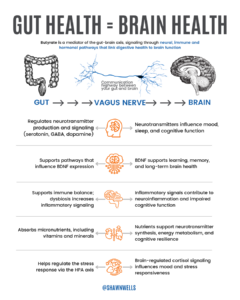
The gut-brain axis is a network of signals, not one single pathway.
- Nerve signaling
The vagus nerve is one of the biggest wiring routes involved in gut-to-brain communication. It also carries signals back down that influence gut movement, secretions, and sensitivity. - Immune signaling
A large share of your immune system sits along the gut wall. When the gut environment is irritated, immune messaging can shift. That can influence how steady your energy feels and how reactive your body feels. - Hormones and stress chemistry
Stress changes gut motility and sensitivity. Gut signals also affect appetite and satiety hormones that shape energy and mood patterns. - Microbial metabolites
Your microbes produce compounds that act like messages. Short-chain fatty acids are one of the best-studied groups, and butyrate is a key one.
Gut-Brain Axis and Digestion Symptoms That Often Cluster
Many people notice the same pattern: digestion symptoms rise, then everything feels harder.
Common gut-brain axis and digestion symptoms include:
- Bloating that predictably follows meals
- Belly discomfort that comes and goes
- Constipation that worsens during stressful weeks
- Foods you used to tolerate now feel hit-or-miss
- Sleep that feels lighter when your gut is irritated
- Focus that slips after eating
These are not diagnoses. Think of them as signals that your gut and nervous system loop may be running too hot.
Why Stress and Bloating Can Reinforce Each Other
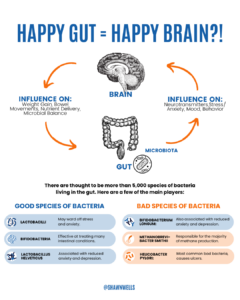
The phrase gut-brain axis stress and bloating describes a real feedback loop.
Stress ramps up nervous system tone. Digestion becomes more sensitive. Motility can change. Then bloating and discomfort rise. That discomfort becomes another stress input, and the loop gets louder.
The goal is not to eliminate stress. The goal is improving recovery so your system returns to baseline faster.
A deeper explanation of how stress, microbes, and signaling interact shows up in research on microbiome regulation of the gut-brain axis.
Gut-Brain Axis Brain Fog After Eating
If you have ever searched gut-brain axis brain fog after eating, you are not alone.
Brain fog after meals can have several drivers, including meal size, sleep debt, stress, and blood sugar swings. The gut-brain axis piece tends to show up when digestion is irritated and signaling becomes noisy.
That “noise” can look like:
- Feeling heavy or foggy after eating
- A drop in drive or attention later in the day
- Irritability that tracks with gut discomfort
- A harder time winding down at night
Most of the time, the fix is not extreme. It is about choosing inputs you tolerate and repeating them long enough to see what actually changes.
Butyrate and The Gut-Brain Axis
If you want one molecule that matters here, it is butyrate.
The butyrate gut-brain axis connection gets attention because butyrate is a short-chain fatty acid produced when gut microbes ferment certain fibers. It has been studied for supporting healthy immune signaling and gut barrier integrity, which can influence how steady you feel day to day.
You will often see phrases like butyrate for gut barrier and butyrate tight junctions in the research. Tight junctions are part of what helps the gut lining act like a smart filter. In preclinical models, butyrate has been shown to support barrier structure through tight junction assembly.
Preclinical work is not a promise. It helps explain why researchers keep targeting butyrate as a key lever.
How to Increase Butyrate Naturally Without Overdoing Fiber
If you want how to increase butyrate naturally, food comes first. These are also the most practical foods that increase butyrate for many people.
- Resistant starch
A strong starting strategy is resistant starch butyrate support. Resistant starch feeds fermentation in a way many people tolerate better than high-dose prebiotics. Try:- Cooked and cooled potatoes
- Cooked and cooled rice
- Oats
- Slightly green bananas
- Legumes
Lentils, chickpeas, and black beans can help. Start small and repeat. Consistency beats intensity. - Polyphenols
Berries, cocoa, extra virgin olive oil, and colorful plants support a gut environment that tends to favor healthier microbial output.
Across all three, the rule that protects you from the “fiber blew me up” problem is pace. Increase fiber gradually.
“Fiber Makes Me Bloated”: What to Do Next
This is one of the most common searches I see: fiber makes me bloated what to do.
Most of the time, fiber-related bloating is about dose, type, and speed.
A classic mistake is jumping from low fiber to a giant scoop of prebiotics overnight. That can create a lot of gas and discomfort, especially early on. Then people conclude fiber is the problem.
Sometimes the issue is not fiber itself. Some fibers ferment very fast and can produce more gas in certain people. That does not make them bad. It means your gut may need a gentler ramp, different fibers, or a different strategy.
This is where targeted butyrate support can make sense, especially if fiber tolerance is your main barrier.
Tributyrin Supplements and “Direct Butyrate” Strategies
If your goal is butyrate signaling, there are two broad paths.
One is feeding fermentation with the right fibers and letting your microbiome do the work.
The other is a tributyrin supplement approach. Tributyrin is a butyrate-containing triglyceride that can be converted by digestive enzymes. That is one way people support butyrate availability without relying only on colon fermentation.
You do not have to choose one forever. Many people do best with food as the base, plus targeted support when needed.
Another Route to Butyrate Support
ButyraGen® is designed as a direct butyrate generator approach.
Instead of relying only on colon fermentation, it uses tributyrin plus supportive fibers. The concept is simple. Tributyrin can be converted by digestive enzymes, while fibers continue downstream and can support fermentation in the colon.
Butyrate is one of the key signals in the gut-brain axis, so supporting it can be a practical lever inside a broader gut-brain plan.
What the ButyraGen® Study Suggests
In the ButyraGen® study, a 6-week randomized, double-blind, placebo-controlled virtual trial evaluated a 200 mg daily dose and reported improvements in self-reported digestive outcomes compared with placebo.
When people refer to the ButyraGen® belly pain trial, they are usually pointing to the belly pain outcomes highlighted in that same published clinical trial.
For the gut-brain angle, there is a separate peer-reviewed analysis that explores quality-of-life and mood-related measures in a non-clinical population. If you want that specific discussion, it is described in the paper on ButyraGen® gut-brain axis outcomes.
The most responsible takeaway is that when digestive comfort improves and gut signaling shifts in a healthier direction, some people may also notice steadier day-to-day functioning. That is a hypothesis supported by the overall gut-brain framework, and it is not a medical claim.
Where to Find ButyraGen® in Supplements
If you want to see what this looks like in a finished formula, here are a few products that include ButyraGen®:
- GOLO GO-3 Plus
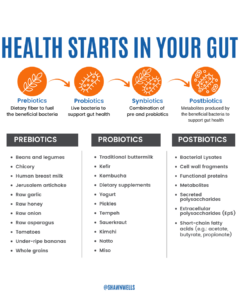
A combination formula built around a prebiotic, probiotic, and postbiotic approach, with an added antioxidant. This is the type of product people look at when they want a wider “gut ecosystem” blend instead of a single-ingredient focus. - Triquetra Flora Digest
A digestive support combo that pairs a full-spectrum enzyme blend with probiotics, then adds ButyraGen® as the butyrate piece. This format is most relevant when your main issue is how you feel after meals and you want enzymes plus microbiome support in one product. - Vitamin Shoppe ProBioCare
A probiotic-focused product line with different options (including men’s and women’s formulas and different strengths). This is a good example of the “probiotic-first” category, where you can compare versions based on the added ingredients you want. - Allergy Research Group ButyrEn
A more targeted butyrate-support product that highlights delayed-release vegetarian capsules and lists ButyraGen® as the tributyrin complex. This is the type of option people consider when they want a simpler, more direct butyrate format. - Bestvite ButyraBoost
A straightforward tributyrin-style product that lists ButyraGen® at 300 mg per capsule, with a short supporting ingredient list. This is the type of formula people choose when they want a direct butyrate generator without a large “kitchen sink” stack.
Bottom Line
The gut-brain axis is not just a concept. It is a real set of signals that links digestion symptoms, stress response, and mental clarity. If your gut feels unpredictable and your headspace feels less steady, the goal is to lower signal noise and build back tolerance.
Start with a simple baseline for the next two weeks:
- Keep one meal consistent each day: protein, one fiber food you tolerate, and a healthy fat. Eat it seated and unhurried.
- Take a 10-minute walk after your biggest meal.
- Add one butyrate-friendly food daily, such as oats, lentils, cooked-and-cooled potatoes, berries, or a small amount of green banana.
- If fiber makes you bloated, reduce the dose and increase more slowly instead of quitting.
If you want a targeted option, a tributyrin-based direct butyrate strategy can be a practical fit when fiber tolerance is the limiting factor, especially since butyrate is a key gut-derived signal in the gut-brain axis.
If you want weekly, science-backed insights to stay on top of your health, join my newsletter.
Disclaimer: This article is for education only and is not medical advice. Supplements are not intended to diagnose, treat, cure, or prevent any disease. If you are pregnant, nursing, have a medical condition, or take medications, talk with your healthcare professional before making changes.
References
Birt, D. F., Boylston, T., Hendrich, S., Jane, J.-L., Hollis, J., Li, L., McClelland, J., Moore, S., Phillips, G. J., Rowling, M., Schalinske, K., Scott, M. P., & Whitley, E. M. (2013). Resistant starch: Promise for improving human health. Advances in Nutrition, 4(6), 587–601.
Breit, S., Kupferberg, A., Rogler, G., & Hasler, G. (2018). Vagus nerve as modulator of the brain–gut axis in psychiatric and inflammatory disorders. Frontiers in psychiatry, 9, 298797.
DeMartino, P., & Cockburn, D. W. (2020). Resistant starch: Impact on the gut microbiome and health. Current Opinion in Biotechnology, 61, 66–71.
Dosz, E., Conley, D., & Lelah, M. (2025). A Novel Butyrate Generator Helps Modulate the Gut-Brain Axis: A Randomized Double-Blind Placebo-Controlled Clinical Study. Nutrition and Dietary Supplements, 127-143.
Dosz, E., Conley, D., & Lelah, M. (2025). A Novel Direct Butyrate Generator Reduces Belly Pain in a Randomized, Double-Blind, Placebo-Controlled Clinical Study. Nutraceuticals, 5(2), 14.
Foster, J. A., Rinaman, L., & Cryan, J. F. (2017). Stress & the gut-brain axis: regulation by the microbiome. Neurobiology of stress, 7, 124-136.
Koh, A., De Vadder, F., Kovatcheva-Datchary, P., & Bäckhed, F. (2016). From dietary fiber to host physiology: Short-chain fatty acids as key bacterial metabolites. Cell, 165(6), 1332–1345.
Peng, L., Li, Z. R., Green, R. S., Holzman, I. R., & Lin, J. (2009). Butyrate enhances the intestinal barrier by facilitating tight junction assembly via activation of AMP-activated protein kinase in Caco-2 cell monolayers. The Journal of nutrition, 139(9), 1619-1625.
Share

Who is Shawn Wells?
Although I’ve suffered from countless issues, including chronic pain, auto-immunity, and depression, those are the very struggles that have led me to becoming a biochemist, formulation scientist, dietitian, and sports nutritionist who is now thriving. My personal experiences, experiments, and trials also have a much deeper purpose: To serve you, educate you, and ultimately help you optimize your health and longevity, reduce pain, and live your best life.



ORDER THE ENERGY FORMULA
Discover the 6 foundational pillars to cultivate a more caring, compassionate, connected, unified and purpose-filled life.
Hardcover, Audible & EBook Available!
UNLEASH YOUR UNLIMITED POTENTIAL
