
Why Water Isn’t Enough When Electrolyte Deficiency Symptoms Hit

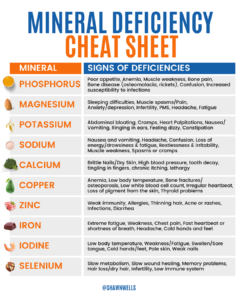
When electrolyte deficiency symptoms show up, they can feel random. Calf cramps one day. A post-workout headache the next. Brain fog and low drive after you have already been good with water.
It is not random. It is a pattern.
Hydration is not just water. It is water plus minerals that help your body move fluid, fire nerves, and contract and relax muscles. When those minerals run low, drinking more water can leave you feeling worse because your body is not holding onto that water in a useful way.
That is why low electrolyte issues can sneak up during sweating, low-carb phases, fasting, travel, and aggressive water intake, and why low electrolyte patterns show up so often in everyday life.
Electrolyte Deficiency Symptoms: What Happens, How It Feels, and The 4-Sign Cluster
Electrolytes are minerals that carry electrical charge. Think of them as the wiring your body uses to manage fluid balance, nerve signals, and muscle contraction and relaxation.
So what happens when your body is low on electrolytes?
Fluid balance gets less steady. You can feel thirsty, pee often, and still not feel hydrated.
Nerve signaling can feel more reactive. Some people notice jittery energy, irritability, or that keyed-up feeling that overlaps with searches like low electrolytes symptoms anxiety.
Muscles may not relax cleanly after they contract, which is when tightness, twitching, and cramps show up.
If you’re wondering what it feels like when you’re low on electrolytes, it often looks like a small cluster of issues that travel together, not one dramatic symptom.
Here are 4 signs of an electrolyte imbalance that commonly show up as a package:
- Cramps, tight muscles, twitching
- Headaches after sweating or heavy water intake
- Lightheadedness when standing up
- Fatigue and brain fog that do not match your effort
One thing to keep in mind is that cramps are not always an electrolyte story. Sometimes it is fatigue, training load, or a nervous system that’s been pushed too hard, which lines up with what research on exercise-associated muscle cramps suggests.
Why More Water Can Make You Feel Worse
More water is not always better.
If you sweat and replace only water, sodium can drift too low for comfort. That risk is best known in endurance sport, but the same mechanism can show up in everyday life, including the overdrinking patterns described in medical guidance on exercise-associated hyponatremia.
There is also a broader clinical pattern where water intake overwhelms the body’s ability to maintain sodium balance, which shows up in the literature on water intoxication and hyponatraemia.
So if you’re running to the bathroom all day and still feel off, it’s probably not more water you need. It’s minerals.
The Big 4 Electrolytes in Real-World Terms
You do not need a biochemistry degree here. You need a usable mental model.
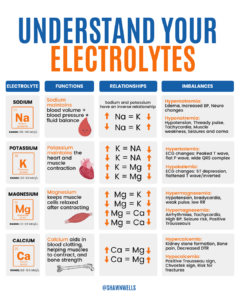
- Sodium
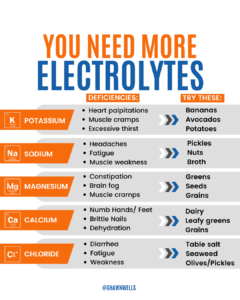
Sodium helps maintain blood volume and fluid retention. It also supports nerve signaling and muscle contraction. After heavy sweating, sodium-containing fluids tend to support better fluid retention than plain water, which is a recurring theme in post-exercise rehydration research. - Potassium
Potassium supports nerve signaling and muscle contraction. For most people, food is the safest way to increase it consistently. - Magnesium
Magnesium supports normal nerve function, relaxation, and recovery. When magnesium is low, your body can feel like it has trouble settling down. The practical differences between forms are covered in my Magnesium Guide, and the day-to-day signs show up clearly in Magnesium Deficiency: How It Impacts Your Health. - Chloride
Chloride usually travels with sodium. It supports fluid balance and stomach acid.
How Do You Improve Your Electrolytes Without Overthinking It
Most people do best when they match electrolytes to demand.
Demand rises with heat, sweat, fasting, low-carb eating, travel, alcohol, and aggressive water intake.
Demand drops on cool rest days with normal eating.
Instead of guessing all day, pick one time you predictably feel off and improve coverage there first. That single change often tells you whether electrolyte deficiency symptoms were part of the problem.
How to Fix Electrolyte Imbalance at Home
For most healthy adults, mild imbalance patterns respond to food, smarter hydration, and a simple routine.
Start with food-first:
- Salt meals to taste, especially if you sweat or eat mostly whole foods.
- Build potassium into daily food choices, like potatoes, beans, lentils, yogurt, leafy greens, and avocado.
- Use magnesium when tightness, restless sleep, or poor recovery are part of the picture. The form matters, and that’s why I point people to my Magnesium Guide.
Then run a simple 7-day test:
- Days 1-3
Pick one time you consistently feel off. Add electrolytes there using food or a drink mix. - Days 4-7
If symptoms show up after sweating, add a second electrolyte moment around training. - Week 2
Make it demand-based. Training days and heat get more support. Rest days often do fine with food-first.
If you like data, weigh yourself before and after a sweaty workout. A meaningful drop suggests meaningful fluid loss, and research on post-exercise rehydration supports sodium-containing fluids for retention in many situations.
What Is The Best Drink to Replace Electrolytes
The best drink is the one that matches what you’re actually losing.
After heavy sweating, sodium is usually the priority. A solid electrolyte drink gives you a meaningful sodium hit, plus some potassium, and sometimes magnesium. Sugar is optional. If you are training hard and want fast carbs for performance, it can make sense. If your goal is hydration and steadier energy, you do not need it.
This focus on sodium is also why many studies on post-exercise rehydration keep finding better fluid retention with sodium-containing fluids compared to plain water.
If you want two simple, clean options that fit different situations, here’s how I think about LMNT:
- LMNT Electrolyte Drink Mix
Best when you want the most control. You can dilute it more on normal days, mix it stronger after a sweaty workout, and keep it travel-friendly. I like this style when you’re trying to correct that “I drank water but still feel off” situation. - LMNT Sparkling Electrolyte Water
Best when convenience is the main need. No mixing, easy to grab after training, yard work, or a hot day. It’s also a nice swap if you want something that feels like a real drink but you are avoiding sugary sports drinks.
Either way, the decision point is simple. If you sweat a lot and feel wiped out, crampy, or headachy afterward, choose the option that helps you actually follow through. Drink composition does matter for recovery, which is why research comparing rehydration strategies looks at how different fluids affect how fast you get back to baseline.
Low Electrolytes Symptoms Anxiety and The Stimulant Trap
Low electrolytes can overlap with symptoms people label as anxiety.
Jitters, irritability, poor stress tolerance, and lighter sleep can happen when fluid and minerals are not stable. Caffeine can amplify that feeling, especially on an empty stomach.
When that’s the combo, I like to fix the foundation in order. Start with minerals. Protect sleep. Then decide if you still need a stimulant.
If coffee feels harsh but you still want clean focus earlier in the day, enfinity paraxanthine is an option that has been studied in humans for attention and short-term cognition outcomes, including this trial on acute paraxanthine ingestion and cognition. It is not an electrolyte replacement. It fits after electrolytes are handled, and I explain that comparison in how paraxanthine compares to caffeine.
Symptoms of Low Electrolytes in Elderly
Symptoms of low electrolytes in elderly adults can be easier to miss and easier to trigger.
Thirst cues can be less reliable. Appetite can be lower, which reduces mineral intake. Medications like diuretics can shift fluid balance.
This is also where changes should be more intentional and often clinician-guided, especially when blood pressure, kidney function, or medications are involved.
Electrolyte Imbalance Test, Electrolyte Deficiency Disorders, and When This Can Be Dangerous
If you are searching for an electrolyte imbalance test, the common clinical route is blood work like a basic metabolic panel, which can show sodium, potassium, and chloride.
You may also see clinicians use terms like electrolyte deficiency disorders when the imbalance is tied to medical conditions or medication effects, not just lifestyle. In those situations, follow the clinician’s plan closely.
Is electrolyte imbalance dangerous? It can be.
Mild patterns are usually annoying and fixable. More serious imbalances can affect the heart and nervous system, which is part of why guidance on exercise-associated hyponatremia emphasizes awareness and prevention.
If you have fainting, confusion, severe weakness, new heart rhythm concerns, or symptoms that escalate quickly, get medical care.
This is education, not medical advice. If you have kidney, heart, or adrenal issues, are pregnant, or take medications that affect fluid balance, talk with your clinician before major sodium or electrolyte changes.
Conclusion
When electrolyte deficiency symptoms show up, it usually means the same 3 systems are getting wobbly at once: fluid balance, nerve signaling, and muscle recovery. That’s why it can feel like cramps, headaches, brain fog, lightheadedness, and that keyed-up “anxious” edge.
No need to turn this into a spreadsheet. Focus on the handful of changes that actually move the needle.
- Stop forcing water. Drink normally, especially if you’re peeing nonstop and still feel off.
- Replace minerals with food first. Sodium and potassium are the big ones for most active adults.
- Use magnesium when your body won’t downshift. Tight muscles, restless sleep, slow recovery.
- Use an electrolyte drink when demand goes up. Heat, sweat, fasting, travel, long workouts.
Run that for a week and pay attention to what changes. If energy steadies out, headaches ease, cramps quiet down, or workouts feel “normal” again, you found a root cause many people miss.
If you want this kind of practical, science-backed guidance in your inbox each week, join my newsletter. I’ll send you the strategies that actually work, the ones to skip, and the small moves that make results stick.
References
Hew-Butler, T., Loi, V., Pani, A., & Rosner, M. H. (2017). Exercise-associated hyponatremia: 2017 update. Frontiers in medicine, 4, 21.
Ly, N. Q., Hamstra-Wright, K. L., & Horswill, C. A. (2023). Post-exercise rehydration in athletes: effects of sodium and carbohydrate in commercial hydration beverages. Nutrients, 15(22), 4759.
Maughan, R. J., & Leiper, J. B. (1995). Sodium intake and post exercise rehydration in man. European Journal of Applied Physiology and Occupational Physiology, 71(4), 311–319.
Merson, S. J., Maughan, R. J., & Shirreffs, S. M. (2008). Rehydration with drinks differing in sodium concentration and recovery from moderate exercise-induced hypohydration in man. European Journal of Applied Physiology, 103(5), 585–594.
Miller, K. C., McDermott, B. P., Yeargin, S. W., Fiol, A., & Schwellnus, M. P. (2022). An evidence-based review of the pathophysiology, treatment, and prevention of exercise-associated muscle cramps. Journal of athletic training, 57(1), 5-15.
Peden, D. L., Funnell, M. P., Reynolds, K. M., Kenefick, R. W., Cheuvront, S. N., Mears, S. A., & James, L. J. (2023). Post-exercise rehydration: Comparing the efficacy of three commercial oral rehydration solutions. Frontiers in sports and active living, 5, 1158167.
Rangan, G. K., Dorani, N., Zhang, M. M., Abu-Zarour, L., Lau, H. C., Munt, A., … & Wong, A. T. (2021). Clinical characteristics and outcomes of hyponatraemia associated with oral water intake in adults: a systematic review. BMJ open, 11(12), e046539.
Yoo, C., Xing, D., Gonzalez, D., Jenkins, V., Nottingham, K., Dickerson, B., … & Kreider, R. B. (2021). Acute paraxanthine ingestion improves cognition and short-term memory and helps sustain attention in a double-blind, placebo-controlled, crossover trial. Nutrients, 13(11), 3980.
Share

Who is Shawn Wells?
Although I’ve suffered from countless issues, including chronic pain, auto-immunity, and depression, those are the very struggles that have led me to becoming a biochemist, formulation scientist, dietitian, and sports nutritionist who is now thriving. My personal experiences, experiments, and trials also have a much deeper purpose: To serve you, educate you, and ultimately help you optimize your health and longevity, reduce pain, and live your best life.


ORDER THE ENERGY FORMULA
Discover the 6 foundational pillars to cultivate a more caring, compassionate, connected, unified and purpose-filled life.
Hardcover, Audible & EBook Available!
UNLEASH YOUR UNLIMITED POTENTIAL
