
Toxin Light: 8 Daily Swaps to Reduce Daily Toxin Exposure

Let’s get real. Your home looks clean, yet the air can be dirtier after dinner than a walk downtown. Your skin care may smell “fresh”, but that scent can hide complex mixtures. A quick lunch reheat in plastic feels harmless, until you learn how heat changes contact with food. If any of this sounds familiar, you are not alone. I’ll show you simple non toxic swaps that help you reduce daily toxin exposure without tossing your whole routine.
Big Wins That Reduce Chemical Load
I focus on three places that move the needle, your air, your skin, and your food contact. These swaps fit real life and cut the biggest sources first. Where science is early or mixed, I call it out and choose the safer path. The goal is fewer everyday toxins at home, not perfection.
1. Fragrance Free vs Unscented, What to Buy
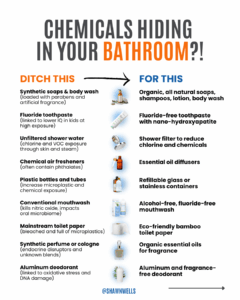
Here is the fragrance free vs unscented difference in plain language. “Fragrance” or “parfum” on a label can mean a mix of ingredients. Studies link phthalates in fragrance to higher exposure from routine personal care use, including perfumes, lotions, and hair products, as shown in recent work on personal care product use and phthalate biomarkers and a broader review of fragrance-containing products and exposure. I lean fragrance free for detergent, lotion, and body wash. If you like a light scent, choose brands that fully disclose ingredients.
How to do it:
- Read labels and avoid “fragrance” or “parfum”.
- Choose fragrance free, not unscented.
- Start with detergent and lotion, then expand.
This single habit helps you reduce daily toxin exposure with almost no friction.
2. Safe Nail Polish Alternatives That Feel Normal
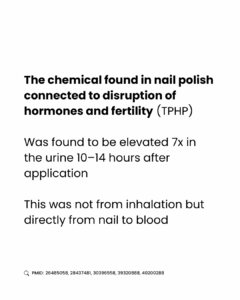
Nail products can be a concentrated exposure during application and drying. Short contact and fresh air are your friends. Choose “free-from” polishes with clear ingredient lists. Use remover briefly, then moisturize. In salons, sit near a door or window for clean indoor air tips that actually work. Ingredient evidence is mixed across brands and formulas, so the practical play is less time in fumes, simpler formulas, and better airflow. If you want a primer before your next appointment, scan a PubMed overview on exposure from nail product ingredients to guide your choices.
How to do it:
- Pick safe nail polish alternatives labeled “free-from”, and check for full ingredient disclosure.
- Keep sessions short. One or two thin coats, then let them dry fully between layers.
- Use remover for the shortest time needed, then wash hands and apply a simple moisturizer.
- At the salon, ask for a seat near a door or window and avoid busy times to improve ventilation.
- Store polish and remover in a sealed bag or box so fumes do not sit in your bathroom.
3. Kitchen Ventilation and HEPA Basics That Matter
Cooking releases particles and gases, even on electric. Ventilation range hood use is one of the most effective indoor air quality tips you can adopt today. Turn the hood on before preheat and keep it running for 10 minutes after you finish. If your hood vents outside, great. If it recirculates, still use it for capture and crack a window. Real-world research shows hood use lowers indoor particles and gases from cooking, including a recent test of gas and induction cooking with and without recirculating hoods and a community trial linking regular hood use with lower household pollution.
For extra help, place a small portable HEPA near the kitchen. It is not a pass to skip the hood, it is a helper. Trials show portable units can lower PM2.5 in homes, from a CDC-supported crossover study on HEPA air cleaners in primary rooms to a household study on the real-world efficacy of HEPA air cleaners. When shopping, skim HEPA MERV basics in the specs, then pick the best hepa air filter for home basics that fits your room size.
How to do it:
- Hood on, window cracked, start to finish.
- Clean grease filters monthly.
- Add a small HEPA near where you cook.
This is one of the fastest ways to reduce daily toxin exposure from everyday cooking.
4. How to Reduce Daily Toxin Exposure with Food Storage
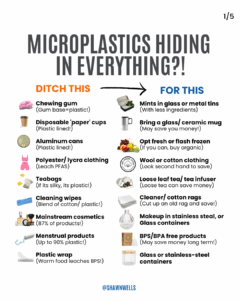
Heat and wear increase migration from many plastics. The easiest fix is to swap plastic food containers for glass and keep plastic lids off in the microwave. Reviews in medical and food science journals discuss migration from microwaved plastic containers and broader concerns about plastic containers as a source of chemical transfer. This simple shift gives you safe food storage options and supports a steady microplastics reduction kitchen plan over time.
How to do it:
- Reheat in glass, not plastic.
- Hand wash plastic lids to reduce wear.
- Use stainless or glass bottles for hot coffee and soup.
5. Thermal Receipts and Bisphenols
Those little slips can carry more than totals. Many thermal papers use BPA or BPS in the coating. Human experiments suggest transfer to skin with normal handling, and some uptake through the skin over time. To play it safe, go digital when you can. If you need the slip, fold the print inward, bag it, and wash hands before eating. For a deeper look, see controlled findings on dermal exposure to bisphenols from receipt paper and newer work measuring BPA and BPS transfer from thermal paper.
How to do it:
- Ask for no receipt or a text receipt.
- If you keep it, store it in an envelope.
- Wash hands before snacks or meals.
6. Nonstick Pan Alternatives without PFAS
Some nonstick coatings rely on PFAS chemistry. Damage and high heat can increase breakdown. When a pan wears out, I replace it with stainless steel, cast iron, or a well-tested ceramic. For any pan, cook on medium, preheat oil, and skip aerosol sprays. Laboratory surveys have reported PFAS in a range of consumer products, including items marketed as water and grease resistant. If you want a technical view on consumer sources, scan a review of fluorinated substances in consumer goods. This is a simple way to reduce chemical load long term.
How to do it:
- Keep one good stainless skillet for daily use.
- Use cast iron for searing and oven work.
- Replace any pan with flaking or scratched coating.
7. Non Toxic Water Bottle Materials and Filters
Hot drinks and worn plastics are not a great mix. To reduce daily toxin exposure, I stick with stainless or glass bottles for coffee, tea, and soups. If you want a tech-forward option after that, a hydrogen water bottle can be a nice add. I’ve tested the Echo Flask hydrogen water bottle for on-the-go use and found it simple to integrate into a daily routine. Use code: SHAWN10 for 10% off.

At home, start with a certified carbon block filter for taste and common contaminants. If budget allows, reverse osmosis may reduce a wider range. Research on microplastics in drinking water is still evolving, so I focus on steps you can control, like materials and on-time filter changes.
How to do it:
- Choose stainless or glass as your primary bottle.
- If desired, add a hydrogen water bottle for travel or workouts.
- Use a carbon block pitcher or under-sink unit, and consider reverse osmosis later.
- Replace filters on schedule so performance stays consistent.
8. Safer Cleaning Products, Simple Ingredients
You do not need a lab degree to choose better cleaners. Start with products that list full ingredients. Avoid heavy fragrance and pick simple formulas that cut VOCs in cleaners. Target the rooms where you spend the most time first. Ventilate during use, then open a window for a few minutes after. These are practical indoor air quality tips that stack up across the week. If you want a shopping shortcut, review brand lists that publish full ingredients, then stick with a small set to reduce decision fatigue.
How to do it:
- Favor short ingredient lists and fragrance free options.
- Use the smallest effective amount.
- Ventilate during and after cleaning.
Daily Basics That Reduce Chemical Load
Your body already knows how to handle everyday exposures. My job is to help you give it less work. When you eat real food, get enough protein, stay regular, move a little each day, and sleep on a set schedule, your system runs smoother. These simple habits make it easier to reduce daily toxin exposure without stress.
Try this this week:
- Build plates around protein, colorful plants, and healthy fats.
- Drink water across the day and keep fiber steady to support regularity.
- Get morning light, take a 10 to 20 minute walk, and set a simple bedtime.
- Keep cleaning routines short with good airflow, then open a window for a few minutes.
Small habits stack. Keep what works, drop what does not, and make the next change when the last one feels automatic.
How I Weigh The Science
Environmental health research often starts with bench tests, modeling, or small human studies. That is normal. I track the direction of evidence and choose low effort, high return steps first. Ventilation while cooking, better storage materials, fewer thermal receipts, and simpler products are practical moves with a good upside. When stronger human trials arrive, we can adjust. Until then, the plan above helps you reduce daily toxin exposure while life stays simple.
One-Week Plan to Reduce Daily Toxin Exposure
Pick one change, then add the next.
- Turn on the range hood, crack a window, and keep it running for 10 minutes after you cook.
- Choose fragrance free for detergent and lotion to cut hidden mixtures.
- Swap plastic food containers for glass, and keep plastic lids off in the microwave.
- Say no to thermal receipts, or wash hands after handling.
- Retire worn nonstick and keep a stainless skillet in daily rotation.
If this helped, join my weekly newsletter. You’ll get one practical tip every week to stay on top of your health, cut noise, and keep progress simple.
References
Biedermann, S., Tschudin, P., & Grob, K. (2010). Transfer of bisphenol A from thermal printer paper to the skin. Analytical and Bioanalytical Chemistry, 398(1), 571–576.
Hormann, A. M., Nagel, S. C., vom Saal, F. S., Welshons, W. V., Hotchkiss, A. K., & Stahlhut, R. W. (2014). Holding thermal receipt paper and eating food after using hand sanitizer results in high dermal absorption of bisphenol A. PLOS ONE, 9(10), e110509.
Koelmans, A. A., Nor, N. H. M., Hermsen, E., Kooi, M., Mintenig, S. M., & De France, J. (2019). Microplastics in freshwaters and drinking water: Critical review and assessment of data quality. Water Research, 155, 410–422.
Logue, J. M., Klepeis, N. E., Lobscheid, A. B., & Singer, B. C. (2014). Pollutant exposures from natural gas cooking burners: A simulation-based assessment for Southern California. Environmental Health Perspectives, 122(1), 43–50.
Na, S.-H., Kim, M.-J., Kim, J.-T., Jeong, S., Lee, S., Chung, J., & Kim, E.-J. (2021). Microplastic removal in conventional drinking water treatment processes: Performance, mechanism, and potential risk. Water Research, 202, 117417.
Steinemann, A. (2020). The fragranced products phenomenon: Air quality and health, science and policy. Air Quality, Atmosphere & Health, 13(10), 1213–1224.
Xu, X., et al. (2018). The effect of portable HEPA filter air cleaners on indoor PM2.5 in homes: A randomized crossover trial. Science of the Total Environment, 616–617, 1224–1230.
Vandenberg, L. N., Maffini, M. V., Schaeberle, C. M., Ucci, A. A., Sonnenschein, C., Rubin, B. S., & Soto, A. M. (2017). Bisphenol A and substitutes in thermal paper: Implications for dermal exposure. PLOS ONE, 12(7), e0178449.
Zhang, Y., et al. (2023). Cooking food in microwavable plastic containers: Safety considerations and chemical migration. Food Chemistry, 410, 135403.
Share

Who is Shawn Wells?
Although I’ve suffered from countless issues, including chronic pain, auto-immunity, and depression, those are the very struggles that have led me to becoming a biochemist, formulation scientist, dietitian, and sports nutritionist who is now thriving. My personal experiences, experiments, and trials also have a much deeper purpose: To serve you, educate you, and ultimately help you optimize your health and longevity, reduce pain, and live your best life.


ORDER THE ENERGY FORMULA
Discover the 6 foundational pillars to cultivate a more caring, compassionate, connected, unified and purpose-filled life.
Hardcover, Audible & EBook Available!
UNLEASH YOUR UNLIMITED POTENTIAL
